Discussion: What Books Do You Aim to Read Pre-2016?

Photo credit: what_marty_sees on Flickr
So it’s finals week! Sort of. It’s like, my last full week of class, but also have a final this week (today, in fact!), and also a class and more finals next week. I don’t know. My brain is so tired.

Incredibly, this means we’re running out of days that end in 2015, so I’ve been thinking about what books I want to squeeze in to read by the end of the year. I’ve already beat my Goodreads challenge (yay!) but so many good books and I may actually have time to do extra reading soon. So!

I’m currently reading Carry On and will definitely be finishing that shortly (update: I finished!). The Abyss Surrounds Us is currently on it’s way to me because I am a very lucky human, so I’ll definitely be reading that before the end of the year too. But then! So many options!

I really want to try to squeeze in Six of Crows before the end of the year too. And also Dreamstrider. Or Cinder. Or Storm. Or Cut Both Ways or Bone Gap. (I have all of these books. They are sitting on my TBR bookshelf next to my desk, judging me.)

Realistically, I think I’ll be able to fit in three books after Carry On. Possibly four or even five depending on how much reading time I get on my mini-actual-travel-vacation (I hear I might not have internet, in which case, probably a lot of reading time).

On the other hand, I also hear I’ll be getting new Assassin Creed games around Christmas…

Fun, short post because as I said my brain is tired. But I’d love to hear from you: what are your final reading goals for the end of the year? 

Twitter-sized bite: 
What are your final reading goals for the end of the year? Join the discussion on @Ava_Jae's blog. (Click to tweet)

The Problem with Superpowered Disabled Characters

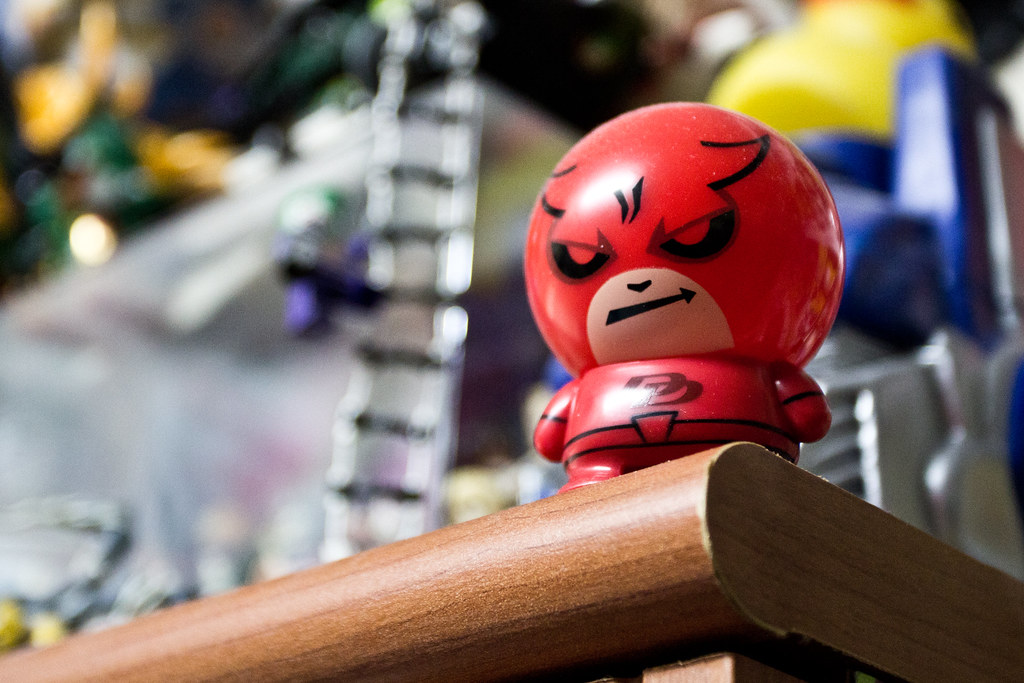
Photo credit: joo0ey on Flickr
So after responding to a long comment on my Lack of Chronic Illness Rep in YA post, I tweeted a little about my frustration with some of the counter-arguments brought up in opposition to the post, including that vampirism/lycanthropy could be considered chronic illnesses (which, by the way, I disagree with for many, many reasons).

This post isn’t about that, exactly, but while I was tweeting about it, @Holly1994 brought up a point that really resonated with me, in that she compared claiming vampirism/lycanthropy is a chronic illness is similar to all those blind characters out there who have superpowers that totally negate their blindness.

Which…got me thinking about how so very common it is for disabled characters to have superpowers that totally erase their disability.

The biggest and easiest example here, of course, is Daredevil—a character who is blind, but whose superpowered senses are so enhanced that he can see through sound, sort of, so he’s blind but…not really. He can still navigate with little difficulty and fight crime and be a total badass due to his ability to sense things around him in precise detail.

I looked up some other examples and found quite a few (by the way, some of the source links have super ableist language, JSYK):

  • Dr. Mid-Nite: blinded by an explosion, but can see in pitch blackness for some reason, so he wears special super-dark goggles so he can see during the day—and fight crime at night. 

  • Captain Marvel, Jr: character who has some kind of physical disability that makes mobility difficult, but can transform into an able-bodied superhero to fight crime before transforming back into his non-superhero, disabled self. 

  • Thor: Apparently in the 1962 comics, Thor also had the transform thing: his “human” self needed a mobility aid to get around (a cane) because Odin wanted to teach him a lesson in humility (which is majorly problematic for entirely different reasons, but I digress), but he could transform into Thor, who is able-bodied, to be a hero. 

  • Iron Man: in the comics, Tony Stark is injured and becomes paraplegic—but he can still move his legs and fly around as Iron Man in his suit, and apparently the comic writers got tired of writing him as disabled and cured him with a biochip implant. 

  • Komodo: A bilateral amputee graduate student who stole The Lizard’s (from Spider-Man) serum to regrow her legs and became a trainee Avenger. 

  • Doctor Strange: apparently a car accident resulted in nerve damage that caused the loss of use of his hands—until he found magic and became a sorcerer. (EDIT: I've been told that possibly Doctor Strange doesn't need use of his hands to perform magic because...it requires less dexterity or something? I'm not familiar with the story, so not sure, but possibly this might be okay.)

I’m sure there are other examples, but you get the idea.

The problem here is exactly what I mentioned above: their superpowers directly negate their disabilities. Physically disabled characters are suddenly able-bodied again, because, apparently, they couldn’t be superheroes otherwise.

Of course, there are examples of superheroes who’s abilities don’t negate their disability–Professor X, for example, who is paraplegic and telepathic—but his telepathy doesn’t make him able to walk again. And Hawkeye who (eventually, at least) is deaf and learns sign language to better communicate—but his supernaturally good aim doesn’t negate the fact that he can’t hear.

Right now at least, I don’t personally have a problem with disabled superheroes whose powers don’t erase their disability. I think it’s cool that many disabled kids may be able to see a character like them who is superpowered and badass but still has to deal with the same difficulties they do with their disability.

However, the narrative of superpower-erasing-disability is so very common, and that is a problem. Because the implication is the only way to make this disabled character awesome is to make him able-bodied. Because people then point to those characters and say there’s your disability representation—you have enough representation already. Because they are, in essence, saying what makes those characters cool is the way they can erase their disability with superpowers.

And that’s not fair. Because it totally erases difficulties disabled people have to wrestle with while still claiming to be representative.

We need more disabled characters—and I want to see them save the world, and hunt down killers, and go to magical schools, and lead revolutions. I want to see them be totally awesome, and get the hot love interest, and be heroes.

But I also want to see them struggle with their disability. I want to see them get frustrated, and deal with ableism, and have bad days and good days. I want to see them take medication, and if their condition is degenerative I want to see them get worse, and be uncertain about the future, and not have a good answer for what life will be like in five, ten years. I want them to deal with their disability in real, tangible ways. I want it to affect their everyday lives, I want their disability to be visible and invisible, and I want it to matter.

But I also want to see them live. I want to see them get by just fine, and be the hero, and I want them to be an inspiration because they do incredible things—not because they’re disabled—and I want their disability to be normalized.

Everyone deserves to see themselves represented, and for the disabled, that means in a way that doesn’t totally erase everything that makes them disabled to begin with. Everyone deserves to see themselves as heroes without being told the only way to do so is to erase their reality.


Twitter-sized bites:
What's the problem with superpowers erasing disabilities? @Ava_Jae breaks it down. (Click to tweet) 
"Everyone deserves to see themselves as heroes without...eras[ing] their reality." (Click to tweet)

Vlog: How to Pick Your Next Book Idea

Choosing your next book idea can be difficult when you have several ideas competing for your attention. Today I'm sharing some tips for picking (and sticking with) the right one.


RELATED LINKS: 


How do you choose a book idea?

Twitter-sized bites: 
Have many WIP ideas but don't know which to write first? @Ava_Jae vlogs about deciding which idea to pick. (Click to tweet) 
On choosing a WIP idea, seeing it through, and resisting Shiny New Idea Syndrome. #vlog (Click to tweet)

Is Twitter Still Worth It?

Photo credit: mine
So I’ve talked about Twitter here on the blog quite a bit, largely because Twitter has, quite literally, changed my life. Twitter was the very first social media account I opened as a writer. It was what gave me the courage to start a blog, and eventually a tumblr, Facebook fan page, Pinterest, Instagram, YouTube and more.

Twitter is where I’ve met so many friends, both who I’ve now met in person and haven’t, who I care for so much. Twitter is where I first found the blog contest that eventually got me my agent, where I landed my first and second internships—which helped me to decide to change my major and led to a promotion—where I’ve connected with so many wonderful writers, bloggers, readers, and industry people. And I’m so grateful for those connections and the reach Twitter has given me.

However, Twitter has been changing.

Over the course of the past year, I’ve seen a ton of important Discussions take over Twitter. Some have been somewhat productive, some have not. All were justified for one reason or another. The Discussions have called out racism, sexism, anti-Semitism, Islamophobia, ableism, transphobia, homophobia, bi-erasure/biphobia, whitewashing and so much more. The Discussions have brought attention to problems in the YA community, in certain books, in the publishing industry as a whole. Discussions have said we need to talk about this and we can’t keep ignoring this and this isn’t acceptable and they are important, they are all so important and necessary.

But alongside those Discussions has come a change in online climate. In the way we speak to each other. In the way we respect (or don’t) others opinions. In the way many feel the need to disagree with every little thing someone says—even the most mundane of opinions. In the way some feel it’s okay to jump into someone’s mentions to tell them they’re wrong when they weren't asking for an opinion in the first place.

But it’s also in the way people treat women who Share Opinions and men who Share Opinions. It’s in the way some who say Regrettable Things are pandered to and those who talk about why those Things are Regrettable get attacked under the guise of Be Kind. It’s in the way women—and especially women who are marginalized—are frequently viciously attacked for saying what they believe, for talking about the way they’ve been marginalized, for saying This Isn’t Okay. It’s in the way men—especially white men—who say the same thing are applauded for being So Brave.

It’s also in the way I’ve seen outspoken female friends chased off Twitter. It’s in the way many automatically assume Bad Faith. It’s in the way Twitter, which used to be a Safe Space, has become something else, something not always safe, something that sometimes is stressful and terrifying—something that often feels like walking on thin ice over a deep lake.

And it’s also in the way I have to pause and think before saying anything even remotely opinionated—because, invariably, a man I don’t know will appear in my mentions to tell me I’m wrong. It’s in the way I have to pause and think before retweeting something important a friend—especially a female friend—is saying, because I might inadvertently expose them to attackers—because I might inadvertently expose myself to attackers.

It’s in the way, even writing this post, I know I may have to brace myself. From commenters. From people on Twitter. From places will people will go out of the way to say I’m overreacting, to say I’m exaggerating, to say I’m hypersensitive, need a thicker skin, should grow up, am wrong.

It’s also in the way I’ve quietly been stepping back from Discussions on Twitter. It’s in the way I hesitate to say something important if it’s going to take me more than a few tweets. It’s in the way I’ve learned to ask is this okay to retweet when my friends say something important—something that could lead to negativity in their mentions. It’s in the way I’ve had to ask myself do I have enough energy to talk about this? Will this Discussion be worth it? It’s in the way I’ve sometimes closed Twitter because the answer is no.

Look. I’m not saying Twitter is a volatile place all the time. I’m not saying one group—whether based off gender, race, or something else—is the problem all the time, or even most of the time. I’m not saying I don’t like Twitter anymore, or it hasn’t been wonderful at times.

What I am saying is it’s changing. What I am saying is the way I use it has been changing, one step at a time. What I am saying is it isn’t as safe as it used to be—not really—and I don’t know if it can or will get better. What I am saying is there has been Good and Bad to come out of this change, and acknowledging it is important.

So here’s what I’m going to do.

I’m going to keep using Twitter, but the way I use it will probably still change.

I’m going to keep participating in Discussions—but only when I have the energy to deal with the potential backlash.

I’m going to look out for my friends. I’m going to reach out to them when I see they’re dealing with backlash. I’m going to share what they say as long as they want me to, and between Discussions I’m going to enjoy Twitter like I did before. With books. And fan excitement. And writing thoughts. And random updates.

I’m also going to take care of myself. And listen. And do my best to try to be a positive force online. And I’ll probably mess up. And I’ll probably regret joining or starting a Discussion. And I’ll probably have to step away sometimes.

But then I’ll try to learn so next time, I can do better. And I’ll do everything I can to enjoy the incredible bookish community that I’ve so come to love.

How about you?

Twitter-sized bite:
With the online climate changing, @Ava_Jae asks if Twitter is still worth it—what do you think? (Click to tweet)

On Keeping Track of (Fictional) Time

Photo credit: FABIOLA MEDEIROS on Flickr
Invariably, when the time comes to revise a WIP, I eventually realize I need to figure out the timeline for the manuscript. Because, as of yet, I've neglected to keep track of passing days/nights/weeks while first drafting (even though, you know, in theory it would be a good idea). And so I have to meticulously go through the draft the look for markers of time and write it down, then see where I need to adjust things so it makes more sense.

So far, I’ve used three different methods for keeping track of time during the process of Going Back to Figure Time Out.

  • The list. This is as simple as it sounds. Usually in Evernote (which is where I take a lot of my notes in general) I’ll start with Day 1, write a brief summary of what happens with bullets that day, and continue until I’ve reached the end of the book. Oftentimes I’ll do this before organizing it into anything else (i.e. the calendar), or I’ll just use this list as is. 

  • The calendar. I did this once for Beyond the Red, mostly because the time system is different there (they have different ways of measuring days, weeks, months, etc.). If I remember correctly, I’m pretty sure I started with the list, then decided to create the calendar to help me see it more visually and also figure out other things. It also became important because I would have markers like “a week later” or “months” or something, and because they measure time differently, it got a little confusing for me to work it out just as the list.

    However, this could also be useful just in terms of keeping track of the days of the week and months, so it’s something I may very well use again in the future. 

  • Aeon Timeline. I only have a free trial of Aeon Timeline right now, but it was so useful with the one instance I used it that I may very well have to invest in the future. The cool thing about Aeon Timeline is you can set up your timeline with whatever markers you’d like—including totally made up measurements. I used it while revising my YA Fantasy just in terms of Day 1, etc. because I needed to keep track of a few threads, and the number of days I was spanning was way too high for me to do it in list form (like, well over a hundred days). This also made it easy for me to see a visual representation of elapsed time, and it did math for me. So. Definitely useful. 

So those are methods I’ve used to keep track of fictional time. In the future, I plan to attempt to be more careful about keeping track while drafting…but knowing my track record thus far, we’ll see how successfully (or not) that goes.

How do you keep track of fictional time in your WIPs?

Twitter-sized bites:
Struggling to keep track of passing time in your WIP? Author @Ava_Jae shares a few methods. (Click to tweet)  
How do you keep track of fictional time in your WIPs? Join the discussion on @Ava_Jae's blog. (Click to tweet)

Post-NaNoWriMo Tips

So it’s December 2nd! Which means NaNoWriMo 2015 is over! YAYYY!

I didn’t NaNo this year—which turned out to be a good thing for me, health-wise—but I know many of you did! And some of you have “won” NaNo and hit your 50,000 word goal, and some of you haven’t—but! In the wise words of literary agent Eric Smith:


So, in essence, you have won no matter what. Go you!

Because NaNoWriMo is over, and many of you have now entered the awkward “Now what?” phase, I’m re-sharing my vlog from last year on things to do after NaNoWriMo. Enjoy!


What are your December writing/break/etc. plans?

Twitter-sized bite:
So you finished NaNoWriMo...now what? @Ava_Jae shares some post-NaNo tips. #vlog (Click to tweet)

Vlog: Why Does it Take So Long for Books to Get Pub'd?

I've found one of the most surprising things to people new to/outside of the publishing industry is how long is takes for books to get published. So! Here's a 4-minute super-speedy overview of why the process takes as long as it does. 


RELATED LINKS: 


Were (or are) you surprised by all of the steps involved in publishing a book?

Twitter-sized bites:
Why does it take so long for books to get pub'd? @Ava_Jae breaks down the process in a 4-min vlog. #pubtip (Click to tweet)  
Curious about everything that goes behind a traditionally pub'd book? @Ava_Jae vlogs about the process. (Click to tweet)
Related Posts Plugin for WordPress, Blogger...