Vlog: Are Writing Classes Necessary?

Do you need to take writing classes to get published? Are they even helpful? Today I'm sharing my experience with creative writing in academia.


RELATED VLOGS: 


Have you ever taken a writing class? 

Twitter-sized bite:
Do you need to take writing classes to get published? Are they even helpful? @Ava_Jae shares their experience w/ creative writing in academia. (Click to tweet)

On Compartmentalizing

Photo credit: Alex Abian on Flickr
Like many writers, I juggle a lot of things at once.

Right now I have grad school. A part-time job. Freelance editing. And I'm an author with an active social media presence.

This month, alongside my regular responsibilities (the part time job, freelancing, social media things, everyday life stuff, etc.) I also had my third book due to my editor, as well as two essays. I tackled the book three revisions by doing what I know my brain does best: binge editing, in which I literally dedicated an entire day to revisions until it was done. That worked really well and allowed me to get that major responsibility out of the way so I could then focus on...everything else.

I won't pretend it's perfect—the stress has literally made my chronic illness flare up multiple times this month. But as I'm nearing the light at the end of the tunnel I'm feeling as though it might just be possible to do everything I need. Hopefully.

I still have all the other things due. But I've been realizing, as of late, the way I have to handle things is one at a time. I feel a little lighter knowing I got one major deadline down, and now I'm tackling the rest with new energy. And I'm thinking that maybe I should handle the some of my responsibilities the same way.

I compartmentalize a lot, but as I'm often juggling A Lot, I've found that it's really how my brain works best. If I can focus on one aspect at a time, and ignore the others while I'm getting one thing done, then I don't get overwhelmed with the mountain of things I need to tackle. And with each completed compartment, I feel even more prepared to handle the next.

This isn't going to work for everyone, obviously. But it's how I've been handling what is essentially four jobs, this semester, and I think I'm going to implement it even more as I go on. Because figuring out what strategies work best for your brain can go a long way toward not dropping all the balls at once.

Do you compartmentalize?

Twitter-sized bite:
How do you juggle multiple, major responsibilities while still meeting your deadlines? @Ava_Jae shares their experience. (Click to tweet

Vlog: Writing a Synopsis Before First Drafting??

What is a synopsis, why do so many writers hate it, and why in the world would I write one *before* the first draft? Today I'm sharing the plotting tool I never expected to like.


RELATED VLOG: 


Have you ever tried writing a synopsis before the first draft?

Twitter-sized bite:
Writing a synopsis before the first draft is a thing? @Ava_Jae vlogs about the plotting tool they never expected to like. (Click to tweet)

Resources for Revision

I'm currently in the middle of revisions for both The Rising Gold and my #ownvoices project, so to say I have revision on the brain is an understatement. I use a couple programs to keep me on target and keep track of my progress, including:


  • Scrivener. I do all my first drafting and a big chunk of my revisions—any revisions before I send my project to my agent and/or editor, basically—in Scrivener. I like how I can visually track what I've added with different colors, so I can watch the unfolding development just through the colors in my manuscript. Plus Scrivener makes big picture edits—edits that involve moving scenes around or deleting them entirely—a lot easier because you can edit through the cork board.


  • myWriteClub. I still use myWriteClub to track my revisions! I enjoy having progress bars so I can see how much I've done, and it helps particularly on those days when I feel like I've worked hard but made little (or not enough) progress.

  • Tide. This is a new app I've added to my arsenal thanks to Katie Locke! This app basically has a timer and focus mode, where you work while the timer is going and then take a break when the time is up. If I'm having trouble focusing, it sometimes helps me shut out the distraction of my phone and focus on my work in snippets. Unrelatedly, I've started using the sleep mode too that has calming sounds to lull you to sleep then wakes you up with birds singing, which is kinda nice.

What programs do you use to revise?

Twitter-sized bites:
What programs do you use to revise? Join the discussion on @Ava_Jae's blog. (Click to tweet)

Vlog: How to Write Memorable Kiss Scenes

How do you write a YA kiss scene that's memorable for all the right reasons? Today I'm talking about some key things to remember while your characters smoosh their faces together.


RELATED LINKS: 


What tips do you have for writing kiss scenes?

Twitter-sized bite:
How do you write a YA kiss scene that's memorable for all the right reasons? @Ava_Jae shares their tips. (Click to tweet)
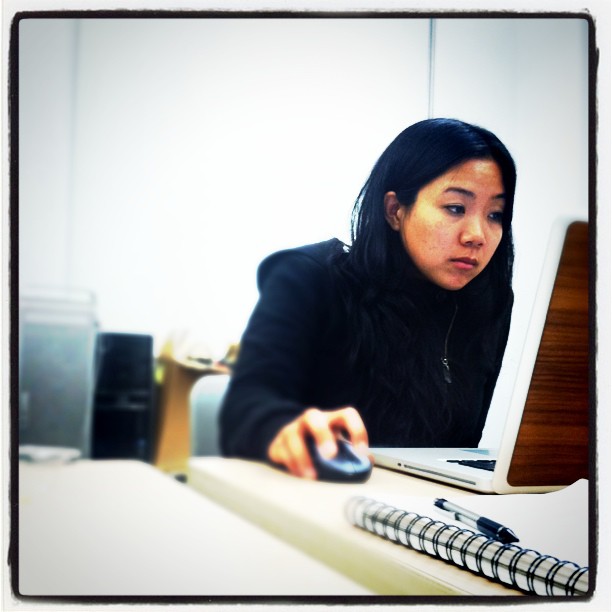
On Grad School and Getting My MFA

Photo credit: permanently scatterbrained on Flickr
I'm now in my second semester of grad school, where I'm getting my MFA in Writing for Children, and life is good. Ridiculously busy—especially when I'm on deadline like right now—but good. To think that this time last year I was agonizing over whether moving 800 miles on my own to get a degree I didn't necessarily need was a good idea—and boy, am I glad I went for it because it's been an excellent idea. The best decision I've ever made, to be honest.

A big part of that is because I'm finally independent and in a place where I can make connections and plant roots—which feels so nice. But the program so far has been really valuable, too.

I'd heard loads of horror stories about MFAs, and how so many of the programs looked down on genre fiction and even those that didn't often looked down on children's literature—so as a YA spec fic author, I was initially hesitant to apply anywhere. Until I did my research and found a handful of programs nationwide that offered a children's lit-specific program in which I could continue honing my skills in the field I actually enjoyed.

Though it's still earlyish in my program, I can say it's definitely done that. But moreso, it's pushed me outside of my comfort zone. In my first semester I dabbled with Middle Grade and Picture Book writing for the first time—and now I have a Middle Grade project I'm excited about and moving forward with. With frequent critiques and need to constantly output work, I've got multiple projects fresh on my mind at all times, which keeps me creatively churning one way or the other.

Starting in the fall I'll begin working with a mentor with a chosen project, which will be a whole 'nother level of critique and creating new words. I'm excited about the future and juggling projects like never before, but at the end of it all I've have even more work I can use in my career. And that's pretty excellent.

While I certainly wouldn't say an MFA is essential to being an author (or a bachelor's degree for that matter, or college education at all), it's a step I'm really glad I took, both as a way to get me to spread my wings, and in terms of my creative output. I've got a ton going on right now, but it's all stuff I love.

Twitter-sized bite:
Curious about what getting a kidlit-focused MFA is like? @Ava_Jae shares their experience so far. (Click to tweet)

Vlog: What's it Like to Go on Submission?

What's it like to go on submission when traditionally publishing? What does going on submission even mean? Today I'm talking about this very important part of the traditional publishing process.


RELATED VLOGS:


Any questions about the submission process? I'm happy to answer what I can! 

Twitter-sized bite:
What's it like to go on submission? @Ava_Jae talks about the last step before getting a book deal. (Click to tweet)
Related Posts Plugin for WordPress, Blogger...