On (Breaking?) Writerly Patterns

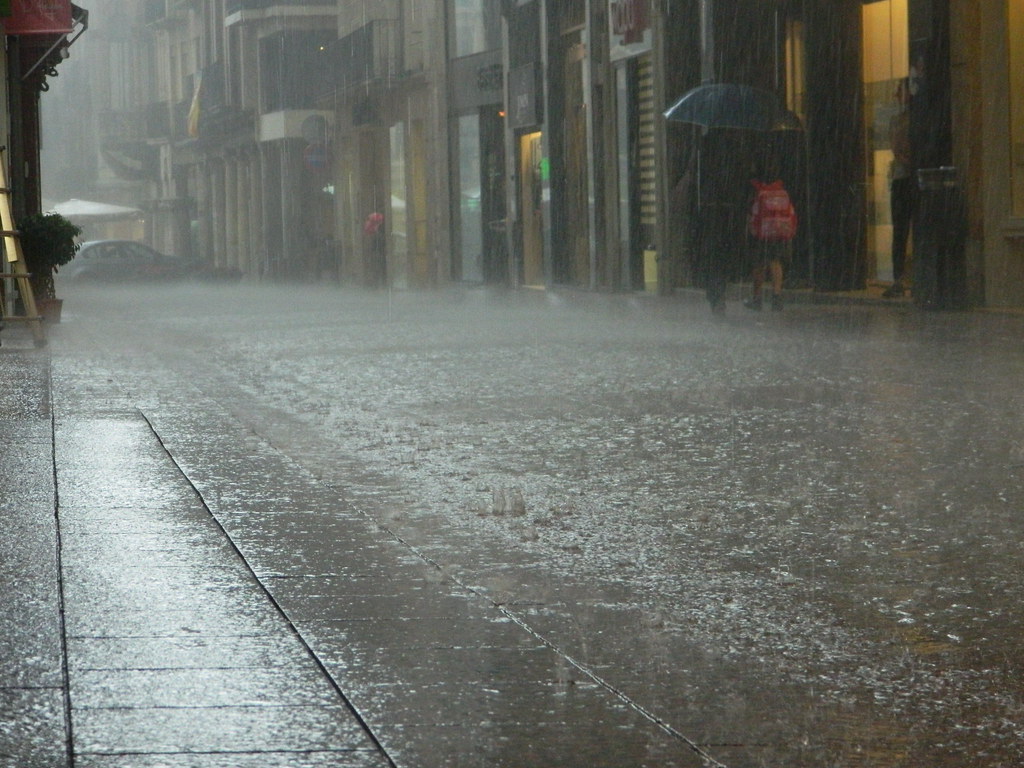
Photo credit: TheZionView on Flickr
We all have different patterns when we write. Some of us write long, with tens of thousands of words we'll have to cut at the end. Some of us write short, knowing we'll have to add ten, twenty, thirty thousand words before it's an acceptable length. Some write chronologically, others mix it up. Some plot, some don't, some always have to fix world building in revisions, others consistently have issues with pacing, or character development, or dialogue, etc.

As I finish plotting my seventeenth book (whoa), I've been thinking a lot about patterns. Like Katie says in the tweet I embedded below, I too frequently worry about whether a novel will be novel-length as I first draft. It's not uncommon for one of my first drafts to fall in the high 40k - low 60k range, and though I know I pretty consistently add 15k - 25k in revisions, it's still a little nerve-wracking every time I finish a first draft and see a number below 60k. What if I can't fill it enough to be the length of an actual novel? I worry endlessly.
So at this point, sixteen novels in, I pretty much expect my word counts to be low—and I usually can tell just how short it's going to be based off how many scenes I have set up when I finish plotting. I try to aim for fifty scenes and usually end up somewhere in the forty range, which is fine. But this time around, with MS #17, things have been starting off a little...differently.

To give you some perspective, Into the Black in its current form has fifty-two scenes (the first draft had forty-seven), and that's unlikely to change at this stage. Those fifty-two scenes fall at around 96k at the moment (word count, of course, is much more fluid and still could very well change before the final copies are printed). It's one of my most thoroughly plotted books, and also—probably not coincidentally—my third longest manuscript ever.

So you can imagine my shock when I finished plotting The Rising Gold and had seventy-three scenes.

Seventy. Three.

This is easily the longest plot I've ever had, and I have to admit, it's a little intimidating. It completely breaks a pattern I've consistently had for, oh, twelve years, and suggests I may be looking at a first draft of well over 100,000 words—which is scary given I usually add 15-25k in revisions because uh...yeah. That's long.

Granted, maybe some of (or many of?) these scenes will end up being super short and I'll have nothing to worry about—which is totally possible. But even if I assume each scene will average out several hundred words shorter than Into the Black's average, I'm still looking at over 100k. But who knows? Maybe each scene will average around 1k and I'll have a low-70k first draft which would be perfect.

I don't know if this is an anomaly or if maybe I'm getting better at plotting and thus won't have to add so much in the end—only time will tell. But breaking a writerly pattern I've had for so long is a bizarre experience that should make the first drafting process—well, uh, let's say interesting.

What writerly patterns do you have? And have you ever broken any? 

Twitter-sized bites:
What writerly patterns do you have? And have you ever broken any? Join the discussion on @Ava_Jae's blog. (Click to tweet)
On breaking writing patterns while plotting, and the ever-evolving writing process. (Click to tweet)

Vlog: 5 Tips for Writing Dialogue

Writing dialogue can be tricky. I've talked before about what *not* to do when writing dialogue, but here are some tips and things to consider when deciding what your characters say and how they say it.


RELATED LINKS:


What dialogue-writing tips would you add to the list? 

Twitter-sized bite:
Struggling to get your MS's dialogue right? @Ava_Jae vlogs 5 tips for writing dialogue. (Click to tweet)

Fixing the First Page Feature #35

Photo credit: Keiko Hiyami on Flickr
June (and the halfway point of the year) is nearly here! Which means it's once again time for the Fixing the First Page critique—yay!

As usual, I'll start by posting the full first 250 excerpt, after which I'll share my overall thoughts, then my redline critique. I encourage you guys to share your own thoughts and critiques in the comments (because I'm one person with one opinion!), as long as it's polite, thoughtful, and constructive. Any rude or mean comments will be unceremoniously deleted.

Let's do this. 

Title: WANDERSONG

Genre/Category: YA High Fantasy

First 250 words:

"There are very few things more inoffensively frustrating than a rainstorm. You’re forced to be cold and uncomfortable, you can’t see a thing, mud gets everywhere, and you’re haunted by the fact that just beyond that curtain of water, there is something towering, ancient, and hungry. 
So then you call the Kingdom’s Royal Officers to dispose of the giant monster looming over your town, and after two weeks with no reply — because they never reply — you end up all by yourself on a mountain soaking wet, freezing, filthy with mud, and wondering how you’re going to go about killing a fifty-foot tall Wanderer through all this damn rain. 
Now repeat for every month and a half. This is what Arony deals with for a living. 
The Wanderers are a species of massive pests that plague the Green Roam, a giant crack in the earth several nations long, with its widest point being a canyon gouging out the Vandega valley like it had been struck with a continent-sized axe. The Wanderers are especially a problem to the Vandega valley because they want inside that canyon. They want inside that canyon because the village of Typry was carved inside its walls, and at some point in that carving process, they had accidentally cracked open a massive well of magic. 
Arony doesn’t live in Typry, but the sheer scale of the problem has gotten large enough that she can’t avoid it anymore."

Wow! So firstly, the voice here is really clear, which is awesome. I actually really like the second person start—you don't see it often and it's hard to pull off, but I think it actually works well here, so nicely done!

I did find it a little odd to transition from second to third though. I've seen transitions from second to first, which I think tend to flow a little better because second is closer to first than it is third, but I stumbled over that in the third paragraph. I think maybe it could be fixed with a better transition...I'll suggest one below.

But all in all, very interesting opening with a great voice. :)

Now for the in-line notes!

"There are very few things more inoffensively frustrating than a rainstorm. I like having the adjective there (because of the voice) but I'm not 100% sure what "inoffensively frustrating" would even mean? I could see offensively frustrating, but I'm not sure what you meant by "inoffensively frustrating." You’re forced to be cold and uncomfortable, you can’t see a thing, mud gets everywhere, and you’re haunted by the fact that just beyond that curtain of water, there is something towering, ancient, and hungry haunts you
So then you call the Kingdom’s Royal Officers to dispose of the giant monster looming over your town, and after two weeks with no reply — because they never reply — you end up all by yourself on a mountain soaking wet, freezing, filthy with muddy, and wondering how you’re going to go about killing a fifty-foot tall Wanderer through all this damn rain. Love the interjection! And the damn rain bit. This voice is fantastic.
Now repeat for every month and a half. This is what  and you have what Arony deals with for a living. I think this works as a better transition because it flows more easily from second to third. Before I was tripping over "This is what" into third, which felt clunkier to me.
The Wanderers are a species of massive pests that plague the Green Roam, a giant crack in the earth several nations long,. with iIts widest point being is a canyon gouging out the Vandega valley like it'd had been struck with a continent-sized axe. Fantastic image and analogy there. The Wanderers are especially a problem to the Vandega valley because they want inside that canyon. They want inside that canyon because the village of Typry was carved inside its walls, and at some point in that carving process, they'd had accidentally cracked open a massive magic well of magic. I will say this paragraph reads a bit info-dump-y. I wonder if maybe you could introduce the monster first (like, Arony seeing the monster) and then give this information? It might transition a little better so it doesn't feel quite so much like a fantasy encyclopedia entry.
Arony doesn’t live in Typry, but the sheer scale of the problem has gotten large enough that she can’t avoid it anymore."

All in all, I have to say this is really well done. I'm super interested in what happens next, pretty much adore the voice, and if I saw this in the slush I'd absolutely keep reading. This story sounds like a lot of fun already and I want to get to know Arony more! :)

Really well done. Thanks for sharing your first 250 with us, KK!

Twitter-sized bite:
.@Ava_Jae talks strong YA voice, info-dumps, transitions & more in the 35th Fixing the First Page Feature. (Click to tweet

Guest Post: Finding Your Writerly Community by Brett Jonas

Hey friends! I have one more guest post for you this month, from Chapter One Young Writers' Conference team member Brett Jonas! I had an incredible time at the conference back in 2014, and the very affordable early bird pricing for the 2017 conference is open until June 1st! Make sure you guise check it out if getting to Chicago is feasible for you. :) 

Take it away, Brett!


When you’re first starting out, writing can seem like a solitary hobby. You sit, alone, in the library. You sit, alone, in the coffee shop. You sit, alone, in your bedroom. But there are other writers out there, and there is nothing that writers love doing more than procrastinating on their writing by hanging out with other writers! Whether online or in person, meeting new writers is lots of fun—and it doesn’t have to be hard to do. Here are a few things that might help you find your writerly community.

  1. Twitter

    Ava has already written several great posts on Twitter for writers, so I’ll just point you to some of her posts about it, but Twitter can be amazing for making friends who are just as passionate about writing as you are! A good way to start is by using some of the well-known writer hashtags and interacting with other people who use them.

  2. NaNoWriMo

    Every year in November, hundreds of thousands of people participate in NaNoWriMo, which stands for National Novel Writing Month, where the goal is to write fifty thousand words in a month. If that seems a bit extreme, you can check out Camp NaNoWriMo, which happens in the summer, and has a flexible word count. With NaNoWriMo, you can meet people in the forums, and during the Camps, you get put in a virtual “cabin” with several other writers, which is a great way to meet new friends!

  3. Writing Conferences

    Chances are, there’s a great writer’s conference somewhere close to you. And if there isn’t, it’s a good excuse to get out and take a trip! Writing conferences can be absolutely amazing. Not only do you get out of your house, but you get to learn from incredible people in publishing and meet writers in person. And I’ve found that, after you get home from a writer’s conference, you’re pretty excited and inspired and ready to get back to writing.

    There are writing conferences all over the country, like Midwest Writers and the Writer’s Digest Conference, but my personal favorite is Chapter One Young Writers Conference (or Ch1Con). It’s a conference for young writers (ages 11 through 23), put on by young writers (including me!). Speakers for the 2017 conference include Kody Keplinger (New York Times Bestselling author of RUN, THE DUFF, and more), literary agent Brent Taylor, and more. Ch1Con has always been an amazing experience for me, and I’d love to meet you there!


Brett Jonas is a writer, reader, Christian, lover of chocolate, and over-user of smiley faces. After being homeschooled her whole life, she’s now taking classes at the local community college and working in her family’s business, Goat Milk Stuff, with her seven younger siblings. In the rare moments when she’s not writing, working, or doing homework, you can find her doing things for the Chapter One Young Writer's Conference or wasting time on Twitter as @BookSquirt, where she loves making friends and using too many exclamation points.

Where have you found your writerly community? 

Twitter-sized bite:
Struggling to find a writer community? @BookSquirt shares some tips for finding those connections. (Click to tweet)

How Do You Know You're Ready for Critique?

Photo credit: clarkmaxwell on Flickr
Getting critiqued is never easy. It can be tough to have all of your book's flaws pointed out to you, and see the pile of work you'll need to do to fix it mount up. It can be intimidating—and even a tad embarrassing—to see your manuscript's mistakes and shortcomings highlighted as you ask yourself why you hadn't noticed them before.

Which is why, when going into a critique, it's important to have the right mindset. But how do you know you're ready?

Writers work with critique partners at different stages, largely dependent on personal preference. Some work with readers as they first draft, largely for encouragement and bouncing ideas back and forth. Some send their first drafts to their critique partners the moment they've finished the manuscript. Some, like myself, wait until they've revised the manuscript at least once by themselves before they start gradually working with critique partners.

In the end, the when will depend on how you work as a writer and what you're able to handle. I'm a very practical person, so I prefer to work with critique partners later on in the process so I can fix a bunch of the biggest issues on my own before my critique partners see it. That way, for the most part, they rarely tell me something I already knew, and it allows me to get a more polished draft at the end. But other writers need the back and forth earlier on in the process, and that's okay too.

But how do you know when you're ready? I think readiness for critique is something you actively develop, not something that magically appears on its own. It comes with understanding the critique process—that they're critiquing the manuscript, not you, and that ultimately, the critique process is necessary for you to make your manuscript the best it can be—and reminding yourself however often is needed that this critique is going to help you and your manuscript.

Critique can be a daunting thing. But the important part is to take a deep breath, remind yourself why you're getting critiqued, and take a step beyond the initial emotional resistance to digest the critique and consider how it will help you.

Sometimes, it takes a long time to hit the point where you're comfortable with critique—and that's okay. Just take it a step at a time, and it'll become a regular (if not slightly nerve-wracking) part of your process that you've figured out how to cope with however works best for you.

How do you know when you're ready for critique?

Twitter-sized bite:
How do you know when you're ready for critique? @Ava_Jae shares some thoughts. (Click to tweet)

Vlog: How to Break Through Writers' Block

Ahh, the dreaded writers' block. We all hit a point at some time or another where the writing just isn't flowing anymore—but what can you do to break through it? Today I'm sharing my block-busting tips.


RELATED VLOGS:


How do you break through writers' block?

Twitter-sized bites:
Struggling with writers' block? @Ava_Jae vlogs some tips for getting through the dreaded slog. (Click to tweet
How do you break through writers' block? Join the discussion on @Ava_Jae's blog. #vlog (Click to tweet)

Fixing the First Page Winner #35!

Photo credit: Raccatography on Flickr
Brief pre-vlog post to announce the winner of the thirty-fifth fixing the first page feature giveaway!

*drumroll*

And the thirty-fifth winner is…


KK JENKINS!


Yay! Congratulations, KK!

Thanks again to all you wonderful entrants! If you didn't win, as always, there will be another fixing the first page giveaway in June, so as always, keep an eye out!
Related Posts Plugin for WordPress, Blogger...