Book Review: THE SOUND OF US by Ashley Poston

Photo credit: Goodreads
So once upon a time, the amazing Dahlia Adler posted about some New Adult books anyone interested in the category should read, and The Sound of Us by Ashley Poston was super highly recommended.

So I read it. And loved it. But before I begin my raving, here’s the Goodreads summary:
“America's favorite pop band, Roman Holiday, is done, dead, and so totally last year. For eighteen-year-old rockoholic Junie Baltimore, this is music to her ears. But when she discovers their sexy ex-lead singer hiding out on the boardwalk, her summer vacation becomes the cover story of the year. 
She's willing to keep him a secret, but when a sleazy paparazzo offers her the cash she needs to save the bar her father left behind, could she sell out for the chance to save her future? Who is she kidding? That's a no-brainer...but she never planned on falling head over heels for the lead singer.”
If I had to describe The Sound of Us in one word, it’d be ADORABLE. Gah. This book was so freaking cute, I don’t even know where to begin.

I picked up this book because I was promised some laughs and a light-hearted, fun read, and that’s exactly what I got. Junie is a delightful protagonist with major snark and some really funny thoughts and Roman is sexy and entertaining and their romance is so swoon worthy and fun and I just loved it.

A lot of NA books have some pretty heavy themes (hell, a lot of what I read in general has some pretty heavy or dark themes), so The Sound of Us was a wonderful breath of sweet, fresh air. Also, I’m not a huge music buff, but if you are, you’ll love this book. For real. So if you’re looking for something fun and downright cute and have an interest in music (or even if you don't!), definitely give this one a try.

Have you read The Sound of Us or something fun recently? 

Twitter-sized bites: 
.@Ava_Jae gives 5/5 stars to THE SOUND OF US by @ashposton. Have you read this fun NA romance? (Click to tweet)  
Looking for a light-hearted, fun NA read? Try THE SOUND OF US by @ashposton. (Click to tweet)

How to Juggle Catchup Work When You’ve Fallen Behind

Photo credit: TheeErin on Flickr
So as basically everyone on the interwebs everywhere knows (or at least, those who follow my various feeds), I went to RT14 two weeks ago.

What less people know is I’m still playing catchup. Yep.

Part of this is due to my own overly ambitious personality (like, oh yeah! Let’s start a vlog RIGHT BEFORE YOU LEAVE FOR A MAJOR CONFERENCE. Oh and let’s give away critiques! And start editing a new book!) and part of it was due to perfect (or not so perfect?) timing of other things just being due or getting sent to me right before and…well…*collapses under mountain of work*

For the record, I love the work I have to do—even the overly ambitious stuff that probably would have been better saved for after the conference. But it is work, and it did pile up and it is a lot. So.

Since I’ve been in marathon catchup mode, I thought it the perfect time to share some tips for whenever you guys have to enter the joy that is trying to catch up after falling behind.

  1. Let others know about your workload/catchup status. This is important! Seriously. If you owe people something, definitely let them know if you’re going to be a little later than usual. Speaking of which, I should probably e-mail some people. *scurries off* 

  2. Prioritize. You can’t do everything at once, you just can’t. Make sure you prioritize your list of catch-up work, starting with whatever is due first if you have strict deadlines. 

  3. Lists. I’ve already blogged about my love of lists before, but this is another example of where lists really come in handy. Somehow, writing lists of things I need to do helps me feel a little more in control of what I’m doing, and plus it feels awesome to be able to check something off the list when I’m done. So. Win-win!

    It also saves me from forgetting anything. Extra win! 

  4. Daily goals. Once you know everything you need to get done, try to break it up over a period of time. This way, you don’t get overwhelmed or burn out from doing too much at once. 

  5. Be kind to yourself. Listen, chances are you’re not going to finish everything in the time span you wanted. Guess what? It happens. And it’s okay.

    At the end of the day, if you haven’t finished all of your daily goals, know that you can get more done tomorrow. Take some time to relax at the end of the day anyway and reward yourself for what you did do—you deserve it. 

What tips do you have for completing catchup work?

Twitter-sized bites:
Falling behind on your workload? @Ava_Jae shares some tips for catching up. (Click to tweet)  
What tips do you have for completing catchup work? Join the discussion on @Ava_Jae's blog. (Click to tweet)

Vlog: #WriterLife Tag

So the fabulous KelsNotChels (aka Kelsey Mackey) did a vlog in which she answered ten writerly questions in a tag she created called #WriterLife. I thought it'd be fun to participate. So I did.

Enjoy!

On Writing to Make a Difference

Photo credit: Mine!
There’s been a lot of really wonderful discussion lately on diversity, sexism, ableism and so much more that’s been absolutely incredible to see. And it’s got me thinking about writing, and more specifically, about the messages we can send with our manuscripts.

Let me start by saying I don’t go into a book setting out to send some kind of message. Most of the time, I’m not even aware of the themes in my manuscripts until I’ve edited several times or a CP has pointed one out to me and I just smile and nod like, “oh yeah, I totally did that on purpose.”

Back to the matter at hand.

I’ve been thinking about books like Easy (Tammara Webber) which feature a love interest who very clearly understands and respects boundaries and shows one of the healthiest, most respectful relationships I’ve ever seen in a book.

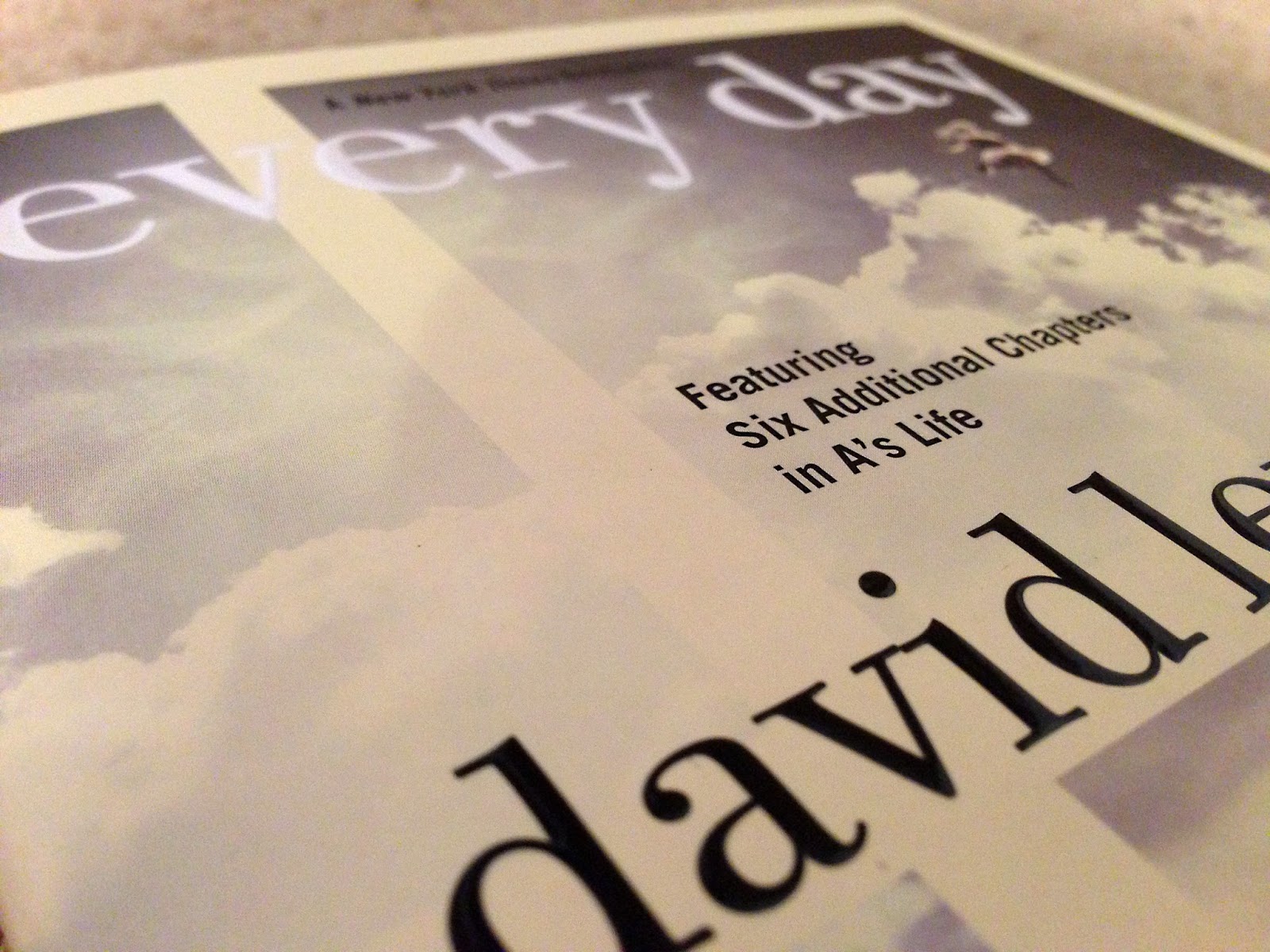
I’ve been thinking about books like Every Day (David Levithan) which puts you in the shoes of characters who are depressed, who are addicts, who are of varying sexual orientations and all have fascinating and equally valid perspectives and challenge you to empathize with them equally.

I’ve been thinking about books the challenge the status quo with little things—with diverse casts and strong characters and calling out harmful tropes for what they are.

And I’ve been thinking we can make a difference with our writing. And it doesn’t have to be a big message book or a story with a moral—it can be a respectful relationship, or a respectfully represented minority or a couple well-placed lines.

Because you never know how that character, scene, or line will affect a reader. Or many readers. And really, that’s all it takes to make a difference.

Have you read any books that made a difference to you?

Twitter-sized bites: 
"You never know how that character...will affect a reader...that's all it takes to make a difference." (Click to tweet)  
Have you read any books that made a difference to you? Join the discussion on @Ava_Jae's blog. (Click to tweet)

The Dangers of Dialect

Photo credit: Scott Smith (SRisonS) on Flickr
Oftentimes, when working with dialogue, writers work with characters who have a peculiar manner of speaking. Whether it’s a weird turn of phrase, a thick accent or unusual slang, it’s not at all uncommon to come across characters with unique speech. 

Unique dialogue, when done well, is great because it makes it easy to identify a character’s voice, and it can also say a lot about their character. However, when done incorrectly, this great character marker can become difficult and painful to read.

The number one problem I’ve come across with unique dialogue is writers going overboard with dialect.

The thing is, dialect is a tricky thing to get right. If you do too little, it’s like you haven’t done anything at all, and the few sections where it’s present feels out of place. Do too much, however, and a character’s speech can go from quirky to nearly impossible to read.

The key is to find a happy medium, which of course isn’t entirely easy, especially at first. Good news is there are three questions you can ask yourself to determine whether or not you’ve gone over the dialect deep end.

  1. Do you have to slow down to read it? This is a huge red flag to me—if I have to slow down to read and process what a character is saying (or worse, read it several times to try to figure out what’s being said), then more likely than not, the dialect’s been overdone. Remember—you never want your writing to draw attention to itself—and forcing your readers to slow down to translate your character’s speech will definitely draw attention away from the story and onto the words. 

  2. Can you read it aloud without tripping over the words? If your answer is “no” or “yes, with practice” then you’ve failed this test. Go back and smooth out your dialogue to make it easier to read.  

  3. Were your CPs and beta readers able to read it without getting frustrated or confused? Self-explanatory. If your CPs and betas are fine with it and didn’t have an issue, then you might be in the clear. But if you’re getting comments on confusing speech, it’s a pretty good sign you should break out the red pen. 

Finally, for a good example of nice, balanced dialect, I give you Hagrid:
“I am what I am, an’ I’m not ashamed. 'Never be ashamed,’ my ol’ dad used ter say, ‘there’s some who’ll hold it against you, but they’re not worth botherin’ with.” —Harry Potter and the Goblet of Fire (J.K. Rowling) 
Have you ever written dialect or come across dialect that was difficult to read? 

Twitter-sized bites: 
Writer @Ava_Jae on dialect: “You never want your writing to draw attention to itself.” More tips here. (Click to tweet)  
Do you have accented characters in your MS? Writer @Ava_Jae shares 3 signs you may want to rework their speech. (Click to tweet

RT14 Panel Recaps!

Photo credit: Me!
So as many of you know, I was at RT con most of last week, which was super amazing. Those of you who follow me on Twitter probably saw me live-tweeting several panels, and since that seemed so popular, I thought I’d share with you guys my notes from the panels, which I put together in a bunch of storify posts. Yay!

Also, this seemed like a best way to consolidate my notes for myself. So. Win-win!

So here we go! Every panel I live-tweeted at RT in one long post. Because it’s so long, however, I’ve made a navigational thingie for you guys so you can skip to whatever panels you’re interested in. Enjoy!

Panels:


Back to the top.


Back to the top.


Back to the top.


Back to the top.


Back to the top.


Back to the top.


Back to the top.


Back to the top.


Back to the top.


Back to the top.

Twitter-sized bites:

Couldn't go to #RT14? Not to worry! Writer @Ava_Jae shares storified notes from 10 panels she attended at the con. (Click to tweet)

Vlog: 4 Reasons Writers Should Go to Conferences

I'm back from RT! And the whole thing was so exciting and wonderful that I did a YouTube thing.

Enjoy!


Twitter-sized bite:
Have you ever been to a writers' conference? Writer @Ava_Jae vlogs about 4 reasons you may want to consider it. (Click to tweet
Related Posts Plugin for WordPress, Blogger...