End of Year Countdown: 5 Top Fives of 2013

Photo credit: life is good (pete) on Flickr
It’s the last post of the 2013! Which means it’s time to share Writability’s annual five top fives of the year. Yay! 

So here we are! A summary of 2013’s awesomeness in terms of writerly goodness. 

Top 5 Most Popular Posts (On Writability) 


As always, calculated with blogger’s page view counts, here are Writability’s top five most popular posts: 
  1. Why Write Blog Posts Consistently?
  2. Do You Listen to Music While Writing? 
  3. Writers: Start Acting Like Professionals
  4. Pirating Books: It’s Not a Harmless Download
  5. Tumblr for Writers

Top 5 Most Active Commenters 


As explained two years ago, I use Disqus’s handy widget on my sidebar to keep track of how many comments every commenter makes. The system isn’t perfect and only keeps track of accounts, so if you comment on multiple accounts, it thinks you’re more than one person, but at any rate, these five awesome readers are the most active commenters of the Writability community—thank you! 

Note: Those with asterisks were on the top five list last year, too. Double thank you! 
  1. Daniel Swensen*
  2. Robin Red
  3. RoweMatthew*
  4. Margaret E. Alexander*
  5. Jen Donohue

Top 5 Favorite Tumblr Blogs of the Year


I’ve really grown to love tumblr. And if you love tumblr too, or give tumblr a try this year, make sure you’re following these five wonderful tumblr blogs: 
  1. Jealous of Jetpacks (Beth Revis’s tumblr blog)
  2. YA Highway
  3. The Writing Café
  4. It’s a Writer Thing
  5. New Leaf Literary & Media, Inc.’s tumblr blog

Top 5 Favorite Writing Blogs of the Year


If you’re here, I already know you like reading writing blogs, so I think you’ll like these too. Because these are my favorite writing blogs of the year: 
  1. Writers Helping Writers
  2. The Write Practice
  3. Chasingthecrazies (Amy Trueblood’s blog)
  4. Miss Snark’s First Victim
  5. YA Highway

Top 5 Favorite Favorite Twitter Accounts


Twitter is basically my favorite thing ever. And these Twitter accounts are awesome: 
  1. Brenda Drake

    Brenda is wonderful not only because she’s a genuinely nice person, but because she frequently runs contests and pitchfests for writers. If you want to keep up to date with contests for writers going on, definitely follow her. 

  2. Janice Hardy and Elizabeth S. Craig
    Janice and Elizabeth consistently share great posts for writers. Definitely recommended for a daily dose of insightful posts. 

  3. Pub(lishing) Crawl

    Another great Twitter for writers! They tweet and retweet posts, tweets and information for writers from all around the Twittersphere. 

  4. Professor Snape

    And this one has nothing to do with writers at all, but if you’re a Harry Potter fan, you’ll love Snape’s joyful tweets. Like this one:
  5. Tahereh Mafi

    Simply because she’s hysterical, writes awesome books and is yet another genuinely super nice person. 
So those are my top fives of 2013—do you have any favorites of the year you'd like to share? 

Hope everyone has a wonderful New Year!

Twitter-sized bite:
Writer @Ava_Jae shares her top fives of 2013—what are some of your favorite writing resources of the year? (Click to tweet)

My Favorite Books of 2013

So the end of the year is nigh, which means it’s time for the 2013 countdowns to begin. I had the pleasure of reading so many good books this year, and of the ones published this year, these were (in no particular order) my favorite five:

Photo credit: Goodreads

I posted a review here for the second book of the Shatter Me trilogy, but to take a quote from that review, “Unravel Me will take your emotions, rip them up, stomp on them, set them on fire, then hand them back to you with a wink and a smile.”

Yeah. That basically sums it up.

Unravel Me is an incredible sequel that’ll have you racing through the pages. I loved it and I can’t wait for Ignite Me to be released early next year.

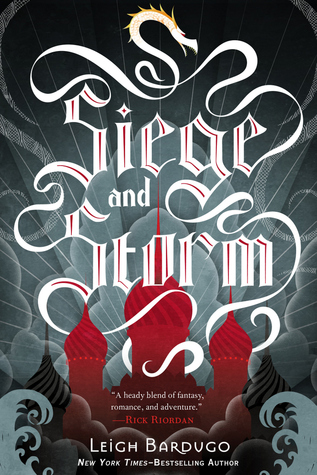
Photo credit: Goodreads


Again, I’ve already raved about how awesome this book is, but Siege and Storm is the second book to what is turning out to be one of my favorite YA fantasy series ever. Between the awesome Russian-inspired setting, some truly incredible characters including my favorite antagonist ever, a great magic system and an interesting plot, I can’t recommend this series more.

Photo credit: Goodreads


Unsurprisingly, this is another one I’ve already reviewed (I tend to do that to my favorites), but this an an unexpected favorite for me. I hadn’t heard all that much about Ink, and I think it deserves a lot more buzz because it’s a fantastic book with a beautiful setting and a truly unique magic system. Ink was a wonderful read and I’m definitely looking forward to the next installment.


Photo credit: Goodreads

So this one did get quite a bit of buzz, and it was well-deserved. I’d heard people raving about how exciting and unputdownable it was long before I finally picked up my copy, and they were right. Cassie is an interesting protagonist with a great voice, the pacing is breakneck awesomeness and the next book really needs to be published already.

Photo credit: Goodreads


Now for something totally different—or at least, different for me.

I don’t read a lot of contemporary romance—in fact, before Losing It, which I read before Faking It, the last contemporary novel I’d read was The Fault in Our Stars back in 2012. But you guys, I loved this book. Max has to be one of my favorite female leads and Cade is easily one of my favorite book boyfriends. Their story was hilarious and awkward and heartwarming and I couldn’t have loved it more.

What are some of your favorite books of the year?

Twitter-sized bites: 
Writer @Ava_Jae shares her favorite five books of 2013. Are any on your list? (Click to tweet)

'Twas the Night Before Christmas (For Writers)

A fun yearly (re-)post for Christmas, with apologies to Clement C. Moore, written by yours truly.

Photo credit: Joe Buckingham on Flickr

‘Twas the night before Christmas, when all through the night
Not a writer was writing, not word was in sight.
Blank pages were scattered on desks and on floors,
In hopes that the manuscripts would leap from their drawers.

The radio was humming a song of good cheer,
Yet I, tortured writer, wished a muse would appear.
And I with my coffee and family asleep
Did stare at the page trying hard not to weep.

When out in the snow there came such a noise,
I fell from my chair, disregarding all poise.
I ran to the door, my heart in my throat,
And did throw it open, forgetting my coat.

And Christmas lights glowing on glittering snow
Seemed just for a moment to put on a show.
When to my astonishment—I’ll admit I did shout,
Came a sleigh from the sky led by reindeers on route.

A driver with eyes spilling over with laughter,
His face I did know I’d remember thereafter.
With a beard so white and his cheeks set aglow,
He waved and he smiled, “It’s me, don’t you know!”

I gaped for a moment and stuttered and said,
“This cannot be real—it’s all in my head!”
But Santa, he snickered and said with delight,
“I hear, my dear child, that you love to write.”

“It’s true,” I said, looking down at my feet,
“But a writer I’m not—I’ve admitted defeat.”
And Santa, he frowned—looked me straight in the eye,
And he said, “You’re a writer, don’t let your dream die.”

So I told him my troubles, how the words wouldn’t come,
And he said, “It’s a gift—it won’t always be fun.
It won’t always be easy or simple or kind,
But for writing, my girl, is what you were designed.”

And he lifted my chin with his finger and said,
“These troubles you’re having—they’re all in your head!
So go back inside and rest for the night,
But know that tomorrow, you’ll write at first light!”

He climbed back on his sleigh and took off in the air,
The reindeers—they trampled the stars with their flair.
So inside I went and turned off the TV,
And sat by the fire with a hot cup of tea.

Asleep, there I fell, and I dreamt of the page
And when I awoke—my mind a golden age!
I rushed to my computer and typed until dawn,
His words, I soon realized—they were right all along!

In hindsight I suppose, I shouldn’t have been surprised,
For that day it was Christmas, true and undisguised.
And that man that I saw, whether he was Santa or not,
He brought to my mind things that I had forgot.

A writer’s a writer every day of the week,
On good days, on bad days, on nights that seem bleak.
But I do what I can and what I can is to write,
As Santa reminded me to my delight.

So next time your writing refuses to flow,
Remember what Santa said to me and know,
You’re a writer tonight and always will be,

For writing is truly what makes you feel free.

Merry Christmas everyone! 

Twitter-sized bites: 
"‘Twas the night before Christmas, when all through the night/ Not a writer was writing, not word..." (Click to tweet 
Writer @Ava_Jae shares a special version of 'Twas the Night Before Christmas for writers. Enjoy! (Click to tweet

Editing Tendencies: Do You Usually Cut or Add?

Photo credit: Ars Electronica on Flickr
When I finished the first draft of MS 10, it clocked in right around 61,000 words. By the time I began querying it several months later, I’d bulked it up to about 74,000 words. Now as I begin revisions again, I’ll be adding even more.

The last manuscript I’d queried before MS 10 had a first draft count somewhere around 40,000 words. In it’s current, most polished state, it’s now sitting pretty at about 86,000 words.

Here’s the thing that I find interesting—oftentimes when writers talk about revising, they mourn the loss of tens of thousands of cut words, and deleted scenes, and entire sections scrapped and rewritten. And while I’ve certainly done my fair share of cutting and rewriting, I find that most times, my biggest issue isn’t cutting—it’s adding.

As many of you who have read my blog before know, I’m a fast drafter. And while I definitely imagine there are fast drafters out there who have to do major cuts to their manuscripts, I find that my first drafts tend to come in really lean. I get the essentials of the story down—character basics, the main plot and any subplots, tiny bits of setting, etc. It isn’t until I start revising that I really get into the nuances of the story—the in-between stuff that takes my manuscript from scraps to a fully fleshed-out book.

Now, there are definitely exceptions—I have one MS that clocked in at around 90-someodd,000 words that needs major cutting and adding (mostly a lot of cutting so I can fit that stuff to add)—but by and large, I find that my revisions are mostly incorporated of layers upon layers of additions.

So that’s my process—now I want to hear from you. Writers, when you edit, do you tend to cut or add? 

Twitter-sized bites: 
Do your first drafts tend to come in lean or prime for cutting? Join the discussion at @Ava_Jae's blog. (Click to tweet
Writers, do you tend to cut or add when editing? Join the discussion at @Ava_Jae's blog. (Click to tweet

Simple HTML Tips for Bloggers

Photo credit: f-l-e-x on Flickr
When I first started blogging, I was well aware that it would entail writing consistently every week. What I didn’t really consider, however, was just how useful my limited HTML knowledge would be.

You see, the large majority of blogging is getting the words to screen, but before you publish a post, you have to check the formatting, and depending on the blog host you use, the formatting might not always play nice. Which is when you have to dig into the code in order to avoid serious formatting frustration.

When formatting my posts, these are the most common HTML tags that I use:

NOTE: You’ll notice that most of the tags actually come in pairs—that’s because in HTML there are opening tags and closing tags. The opening tag indicates where a certain feature or style should begin (for example: italics begin HERE) and the closing tag indicates where the feature/style should end. Closing tags are always indicated with a backslash (/) before the abbreviated code within the brackets.

  • <body></body> : I don’t actually touch these tags, and for simple blogging, you won’t need to either. All you need to know is that the next within these tags is what makes up your post. 

  • <br /> : This is a paragraph break. I often have to insert these manually when doing bulleted or numbered lists so that there are spaces between the bullets or spaces within a bullet for a multiple paragraph bullet. These don’t need an opening and closing tag–just place <br /> wherever you’d like your paragraph break. 

  • <ol></ol> : This is an ordered list tag, to be used to create numbered lists. You place the opening tag at the very beginning of the list, and the closing tag at the end, with list item tags (<li></li>) to differentiate every point within the list. So, for example, a simple 1-4 numbered list in HTML would look like:

              <ol>
                        <li>One</li>
                        <li>Two</li>
                        <li>Three</li>
                        <li>Four</li>
              </ol>

    NOTE: You don’t need to indent in order for the HTML to work—I just did that to make it a little easier to read.

  • <ul></ul> : This is an unordered list tag, to be used to created bulleted lists. You use this the exact same way as an ordered list tag, except you use “ul” instead of “ol.” You can easily convert an ordered list to an unordered list or vice versa by simply going into the code and changing a single letter in the opening and closing tags of the list. 

  • <i></i> : This indicates italics. You don’t usually need to type this manually because I’ve rarely had the italics button glitch out on me, but it’s useful to know so you can recognize it while looking at the HTML. To put a word or phrase in italics, you insert the word(s) between the opening and closing tags, like so:

              <i>I want this to be in italics.</i>

  • <b></b> : This indicates bold text. It’s used the exact same way as the italics tags. 

  • <u></u> : This indicates underlined text. It works just like bold and italics. 

  • <blockquote></blockquote> : I'll bet you can guess what these do (hint: I use them for my Twitter-sized bites and/or any quotes). Like italics, bold and underline, these are tags that I rarely have to adjust manually, but it's helpful to know what it does. 

  • <h1></h1> : These are heading tags. There are actually six different heading tags, varying from <h1> to <h6>. The <h1> tags are the largest and <h6> are the smallest. Like the last couple tags, the text between them is what is affected. 

  • <a href=“[website address]”> [link text] </a> : And this, my friends, is what an embedded link looks like in HTML. Allow me to break it down a little:

    The <a href=“[web address]”> is all part of the opening tag. Within the quotations, you place the web address you want the link to go to (without the brackets). So if you were awesome and linking to my blog, the opening tag would look like this:

              <a href=“www.avajae.blogspot.com”>

    Next is the link text. This is the visible text that people see and click on, so, for example, it might look like this:

              <a href=“www.avajae.blogspot.com”>Check out this awesome writing blog.

    Finally, you need the closing tag, or the link won’t work at all. This is the easiest part—you just add </a> at the end. So your full embedded link would look like this:

              <a href=“www.avajae.blogspot.com”>Check out this awesome writing blog.</a>

The nice part is these tags are all universal and can be used on any server that allows for HTML editing and in any browser.

I hope this helps your HTML-editing needs. If you have any questions, feel free to give me a shout below. :)

Have you edited HTML before? What tags do you most commonly use? 

Twitter-sized bites:
Are you a blogger struggling to understand HTML? @Ava_Jae shares some easy tips to demystify your blog's code. (Click to tweet
Do you struggle with your blog's HTML? Here are some simple tips to make editing HTML easy. (Click to tweet

5 Things All Writers Should Have

Photo credit: ejorpin on Flickr
So it’s the end of the year and people are shopping, and the gifts are piling up (or will be soon?), and there’s wrapping paper everywhere (or you’re dreaming/having nightmares of wrapping paper), and…

Well. I thought it a good time to talk about five seemingly random things (for lack of a better word) that all writers should have. Because why not?
  1. Bookshelves. E-bookshelves are totally acceptable in this category, but the point is, we writers love our books. And we should! Reading isn’t just for pleasure—it’s how we learn and keep up with what’s in the market, and as a nice bonus, we end up with some really nice libraries at the end of it. Assuming you collect them like I do.

    At any rate. Books are a writer’s best friend, and so are the shelves that hold them.

  2. Scrivener. To be fair, the perfect program that works for everyone doesn’t exist, but I do think that every writer should at least try Scrivener. There’s a free trial online and an abundance of tutorials and honestly, I was a die-hard Word-lover until I met Scrivener. Now I can’t imagine writing another novel without it. 

  3. Critique partners/beta readers. I’ve said it before and I’ll probably say it again: critique partners and beta readers are worth their weight in gold. Hell, they’re worth their weight in diamonds. I’ve already written about why they’re so important here, but the short version is this: the most efficient way I know of improving your manuscript and your craft is to trade manuscripts with other writers of your level for critique. Don’t skip this step. Don’t. 

  4. Patience. Writers need a bucketload of patience—patience with others, patience with the process and patience with themselves. Publishing, especially traditional publishing, is a slow process. And before that, you need to give yourself plenty of time to develop your craft, and most of all remember time is on your side.

  5. A support system. Whether it’s family members, friends, or social media buddies, a support system is vital for writers. Writing itself tends to force us to spend time alone, and writers often deal with major ups and downs throughout the journey. Having a support system to cheer you on when you're feeling down and celebrate with you when you have good news is essential to an emotionally healthy and happy writer life. 
What else do you think is important for writers to have? 

Twitter-sized bites:
Writer @Ava_Jae lists 5 things all writers should have—do you agree? (Click to tweet)  
Do you have these 5 vital things for writers? Share your thoughts on @Ava_Jae's blog. (Click to tweet)

How to Write Strong Supporting Characters

Photo credit: Yoshplay! on Flickr
I’ve mentioned this before, but some of my favorite characters ever aren’t the protagonists of their respective stories—they’re supporting characters. Sturmhond (Siege and Storm), Magnus Bane (The Mortal Instruments), Kenji Kishimoto (Shatter Me) and Sirius Black (Harry Potter) are easily among my top favorite characters, and none of them are protagonists.

We often discuss how to write strong, interesting characters with our minds on the protagonists, but supporting characters are just as important and should receive just as much attention as our protagonists do when being written and developed.

But what makes for a strong supporting character?

  • They have their own lives and backstories. Now, that doesn’t mean you have to go into every detail of that backstory in the narrative (in fact, with few exceptions, it’s probably best that you don’t). But knowing the lives of our characters, supporting characters included, helps us to create a more three-dimensional, fully-realized character. And speaking of which…

  • Their world doesn’t revolve around the protagonist. Your supporting characters have their own dreams, priorities and goals. Sometimes their goals may intersect with your protagonist’s goal, sometimes not, but they don’t live to serve your protagonist. When they’re offscreen, they’re still going about their lives, experiencing the world and moving towards some kind of goal—all things you’ll want to keep in mind when writing your supporting characters. 

  • They have their own motivations. And sometimes (though not always) those motivations may come at odds with your protagonist. Again, remember that even when your supporting characters are working directly with your protagonist towards the same goal, their motivations may not be the same as your main character—and that’s something you’ll want to consider and keep in mind. 

What else is important to remember when writing supporting characters?

Twitter-sized bites: 
Supporting characters need just as much development as protagonists, and here's why: (Click to tweet)  
What makes for a strong supporting character? Writer @Ava_Jae explains a few important characteristics. (Click to tweet)
Related Posts Plugin for WordPress, Blogger...