Showing posts with label QUILTBAG. Show all posts

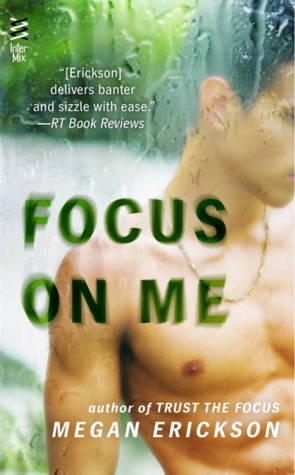
Book Review: FOCUS ON ME by Megan Erickson

Photo credit: Goodreads
I have so many squees to share about this book, but first! The Goodreads summary:
“Colin Hartman can now add college to his list of failures. On the coast-to-coast trek home from California, Colin stops at a gas station in the Nevada desert, and can’t help noticing the guy in tight jeans looking like he just stepped off a catwalk. When he realizes Catwalk is stranded, Colin offers a ride. 
Riley only intended to take a short ride in Colin’s Jeep to the Grand Canyon. But one detour leads to another until they finally find themselves tumbling into bed together. However there are shadows in Riley’s eyes that hide a troubled past. And when those shadows threaten to bury the man whom Colin has fallen in love with, he vows to get Riley the help he needs. For once in his life, quitting isn’t an option…”
Okay. Okay.

Remember when I read Trust the Focus and totally loved it? And then the cover for Focus on Me was revealed and I basically stared at my screen forever?

You guys, this series is quickly becoming one of my favorite NA romance series, like, ever.

After reading Trust the Focus, Focus on Me was everything I hoped for and more. I devoured most of it on a train ride to and from Chicago and sat huddled in my seat, flipping through the pages, my heart totally breaking for Colin and Riley. I can’t tell you how quickly I got attached to these guys and while I still haven’t cried reading a book…this one came close.

Colin and Riley’s romance is steamy, adorable, heartbreaking and real. Erickson tackles some really serious issues (depression and an eating disorder), and while I can’t speak for the accuracy for either of them as I don’t have enough expertise, I can say that at least from my perspective, it seemed to be handled really respectfully. I especially loved that there wasn’t a magical cure (or magical healing love interest either, for that matter).

I love this book and I love this series and I can’t wait for the next one. If you’re looking for some great m/m NA romances, I couldn’t recommend the In Focus series more.

Diversity note: this is a m/m NA and both the love interest and protagonist are gay. One of them also suffers from depression and struggles with an eating disorder.

What have you been reading lately?
.@Ava_Jae gives 5/5 stars to FOCUS ON ME by @MeganErickson_. Have you read this feelsy m/m NA romance? (Click to tweet
Looking for a raw, yet adorable diverse NA? Check out FOCUS ON ME by Megan Erickson. (Click to tweet)

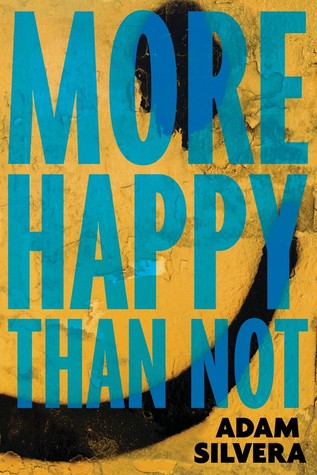
Book Review: MORE HAPPY THAN NOT by Adam Silvera

Photo credit: Goodreads
So I’d heard a ton about this book and did that thing I don’t do very often and pre-ordered a book from an author I hadn’t read before. And while More Happy Than Not by Adam Silvera wasn’t quite what I was expecting, I definitely didn’t regret it. 

Before I go on, here’s the Goodreads summary:
“The Leteo Institute's revolutionary memory-relief procedure seems too good to be true to Aaron Soto — miracle cure-alls don't tend to pop up in the Bronx projects. But Aaron can't forget how he's grown up poor or how his friends aren't always there for him. Like after his father committed suicide in their one bedroom apartment. Aaron has the support of his patient girlfriend, if not necessarily his distant brother and overworked mother, but it's not enough.  
Then Thomas shows up. He has a sweet movie-watching setup on his roof, and he doesn't mind Aaron's obsession with a popular fantasy series. There are nicknames, inside jokes. Most importantly, Thomas doesn't mind talking about Aaron's past. But Aaron's newfound happiness isn't welcome on his block. Since he can't stay away from Thomas or suddenly stop being gay, Aaron must turn to Leteo to straighten himself out, even if it means forgetting who he is. 
Adam Silvera's extraordinary debut novel offers a unique confrontation of race, class and sexuality during one charged near-future summer in the Bronx.”
It’s kind of hard to write about this one without spoiling anything, but I do have several thoughts:

Firstly, the intersectionality in this book was so great to see. I loved reading a protagonist who is Latino but not necessarily Spanish-fluent (which doesn’t sound like a big deal, but as a Latina but not exactly Spanish-fluent person myself, it was very nice to see we exist), and I realized while reading this is one of the few YA books I’ve seen with characters from a lower socioeconomic background.

Secondly, this book broke my heart so many times. Emotions go all over the place with this one, with big highs and really sad lows, and I absolutely loved the twist. Aaron and many of the other characters are complicated, layered characters who felt completely real, and they were a treat to read.

I will say that the pacing in the first third of the book or so was a little slower than my liking, and for a while I wasn’t really sure where the plot was going (and when I did think I knew where the plot was going, I was so wrong which was great). But as things began coming together, the whole story wove together really nicely and I definitely enjoyed it.

More Happy Than Not will bring on the feels and really make you connect with the characters. This book was a delight to read and I definitely recommend it to those looking for something different, gritty, and honest.

I’m giving 4/5 stars to this wonderful YA and I can’t wait to read Silvera’s next book!

Diversity note: The protagonist is Latino, gay, and like many of the characters, from a lower socioeconomic background. Other major characters were also PoC, including the main love interest, and the protagonist also suffers from depression.

What have you been reading lately? 

Twitter-sized bites: 
.@Ava_Jae gives 4/5 stars to MORE HAPPY THAN NOT by @AdamSilvera. Have you read this intersectional YA? (Click to tweet
Looking for an emotional, twisty, honest YA read? Check out MORE HAPPY THAN NOT by Adam Silvera. (Click to tweet)

Queer YA Scrabble Blogathon Giveaway: Team Unicorn

GIVEAWAY IS NOW CLOSED. Thank you everyone for entering! :) 

Today is the day! Welcome to Team Unicorn's Queer YA Scrabble Blogathon stop! I'm so excited to introduce you to the awesome team and their incredible books!

First! A quick rundown of how this thing works.

Team Unicorn is one of FIVE times, and each of us has a post just like this one featuring our fantabulous team. Within these posts are super sneakily hidden letters that are part of an anagram. Every team has their own anagram, and your job, as you super smart sleuths, is to track down the letters and solve each anagram. Once you've solved a team's anagram you can go to the team page and enter the giveaway for that team's box of signed wonderfulness. YAY!

Anagram hint: Here on Writability, you should maybe look out for the pretty rainbow colors. Just saying. ;)

But what if you enter and don't win, you ask? All hope is not lost! Starting tomorrow is the auction that will run until the 15th (giveaway winners will be announced on the 9th), where you will have another chance to win the exact same box of prizes plus wildcard critiques from agents and editors.

Team Unicorn's wildcard prizes are:


Also, there's maybe a bonus giveaway at the bottom of this post. :)

Note: Both giveaways are open to the UK, USA, Ireland, Canada and Continental Europe except Russia.

Explanations aside, I'm delighted to introduce you to Team Unicorn! I've asked them each a couple questions, so enjoy!

Photo credit: Goodreads

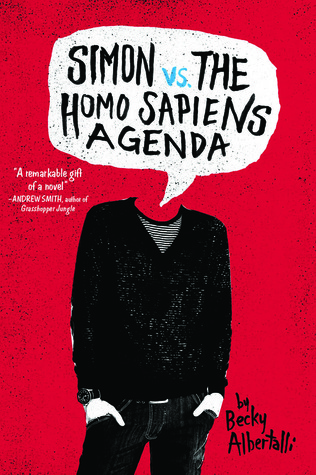
Becky AlbertalliSimon vs the Homo Sapiens Agenda

  1. What inspired you to write your book?

    I struggle with this question, because it truly feels like Simon just popped into my head, demanding to be written about! I have a hard time pinpointing one specific source of inspiration, but I think an important part of my process was my work as a psychologist with LGBT and gender nonconforming teens and children.

  2. It’s been fantastic seeing more and more representation of the full sexuality and gender spectrums. What was the hardest part about writing your novel?

    As a non-marginalized author writing about a character from a marginalized group, my process required a tremendous amount of care, research, and openness to feedback. I think a part of me will always worry about the potential for harm, even after receiving positive feedback from members of the gay community throughout the publication process. Readers still might choose not to read my book because I’m not a gay author, which I completely understand and respect. On the flip side, I’ve been asked why I chose to make Simon white and cisgender, which is an amazing question! It can be a really tricky balance determining which stories I think I can share authentically. I’m absolutely going to fall short sometimes, which can be really hard to accept. It helps when I find myself in a position to support LGBTQIA + causes or boost marginalized authors, both of which I try to do regularly.

Photo credit: Goodreads

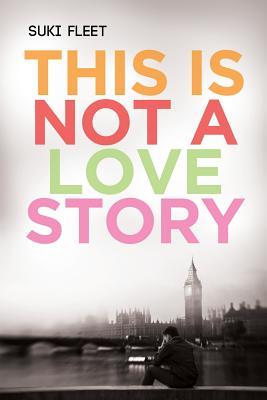
Suki FleetThis is Not a Love Story

  1. What inspired you to write your book?

    My initial shockblast of inspiration came from seeing a homeless kid crying in an alley near where I live. Although I started writing This is Not a Love Story years later, ultimately, I wrote this book for him. I wanted to write a happy ending for kids who don't always get them. Homelessness (especially teen homelessness) is an issue very close to my heart.

  2. It’s been fantastic seeing more and more representation of the full sexuality and gender spectrums. What was the hardest part about writing your novel?

    Writing a novel is crazily hard :)  I'm drawn to writing the stories that don't often get written, and I enjoy bringing to life very diverse characters--characters that hopefully readers can identify with whatever their gender/sexuality/age or status in life.


Photo credit: Goodreads


  1. What inspired you to write your book?

    Lots of things! Firstly, I wanted to write a book for teens that included a gay relationship, as I thought homosexual teens were really under-represented in YA fiction. I didn't want it to be an 'issue' or 'coming out' book, though, so I paired it with another idea I'd had, which just started with a simple question: What if (the best kind of writer question!) you had a secret so powerful it stole your voice?

    The setting of Unspeakable was really important to me. Like me, my character Megan adores being outside, and I live fairly close to the New Forest, which struck me as a unique and beautiful place to set a story. In fact, I love the New Forest so much, I got married there last year, in the same village I used for inspiration for the book!

  2. It’s been fantastic seeing more and more representation of the full sexuality and gender spectrums. What was the hardest part about writing your novel?

    The hardest part for me was worrying that I somehow wasn't qualified to write about a same-sex relationship because I hadn’t experienced one myself. But it was such an important story to tell, and I reasoned that I had experience of falling in love, so why shouldn't I tell it?

    I've had some lovely messages from teens who've said that Megan and Jasmine's relationship made them feel 'normal for a change'. So I hope I've pulled it off!

Photo credit: Goodreads

  1. What inspired you to write your book?

    To make a long story short: In my job as a high school teacher, I experienced how difficult it was for LGBT students to be open and how few novels there were out there that could give them a sense of self, and of not being alone. Since I had always harbored this dream of being a writer one day, I finally got started on a novel that naturally turned out to be LGBT themed. Also, in my first teaching job I worked in a pretty remote area where being different can feel extra problematic, so years later when I started writing Supermassive, I added the same kind of setting to the plot. Though I am a city girl, I have a fondness for remote areas - my next novel is also an LGBT story set far away from urban areas!

  2. It’s been fantastic seeing more and more representation of the full sexuality and gender spectrums. What was the hardest part about writing your novel?

    I did a lot of thinking about how to best present the LGBT side of the story. When I started writing Supermassive, I used neutral gender terms, for example ‘grandchild’ instead of ‘grandson’, a neutral first name, and I never focused on specifics about the protagonist’s looks or clothes. I knew he was a boy, and as the story progressed I made it clearer to the readers too, gradually inserting more clues. In the end, I decided to insert more evidence of his gender, but I did struggle a bit with finding the right balance here. (When it got published, the blurb made it clear he was a boy, though.)

    I wanted my story to be a universal love story where gender or sexuality was not the main issue, but where those aspects still were important to the plot. The book is more about coming to terms with grief and loss, and how to approach your feelings for someone, than it is a story about sexuality. The protagonist knows he’s gay and though he’s not openly out, his sexuality is mostly unproblematic to him. His main concern is first and foremost whether or not his feelings will be reciprocated by the boy he loves so fiercely. When I wrote the book, then, I always made sure those aspects of life that are recognizable regardless of gender or sexual orientation, came first. I experienced a few moments of doubt as I wrote the story, because I sometimes worried that readers would think I ignored the LGBT issue and that I didn’t give it enough space. There is a coming out aspect in the story though, and in the end I think I reached a good balance between the themes.

Photo credit: Goodreads


  1. What inspired you to write your book?

    I lived for several years in Provincetown, Massachusetts which has always been a very GLBT-friendly place. Although I’m straight, I identified with my gay and lesbian friends in P’town who were often estranged from their parents, as I was also. When I began to write novels for teenagers I wanted to include gay and lesbian characters, not only so GLBT teens had someone to identify with, but also so my straight readers would begin to identify with gay and lesbian characters and through that process see what they all had in common.

    I didn’t feel I understood what it meant to be transgender well enough to write about it until I met my daughter’s friend, Toby, who is FTM. It turned out that Toby was a big fan of my earlier books, so when I asked if he’d help me write a transgender character, he was thrilled. I did a lot of reading before I began to interview Toby; I didn’t want my questions to be either stupid or offensive. Toby sat with me for a long afternoon and answered everything. He told me many stories about what it felt like growing up transgender, a few of which I used in the book. And once the book was finished, Toby read and vetted it for me. He’s the angel of Parrotfish.

  2. It’s been fantastic seeing more and more representation of the full sexuality and gender spectrums. What was the hardest part about writing your novel?

    This book was actually a joy to write. It always takes a little while to get your main character’s voice right, but Grady came to me pretty quickly. I loved his humor and gentleness. The only difficulty was my fear of getting something wrong, but that was alleviated by knowing that Toby had my back.

    ----------------

    By the way, Parrotfish will soon be available in a new edition which updates some of the language used and all of the resources at the end of the book. I’m happy that the book will remain relevant to a new generation of teenagers.

Photo credit: Goodreads
  1. What inspired you to write your book? 

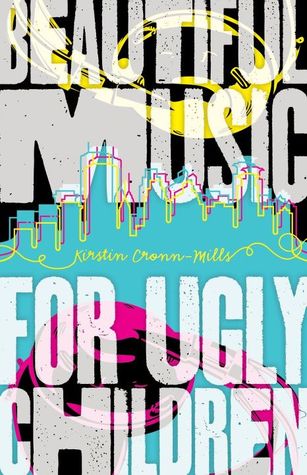
    The inspiration for the book was a mashup of the two worlds I live in: writing and teaching.  I was just beginning the book, and I knew I wanted to write about radio and music, two things I love.  And I knew I wanted to write about a guy who hid behind his radio show while he tried out his identity on the air--no big deal, just the usual teenage who-am-I? stuff.  At the same time I started the book, I was prepping to teach a diversity literature class at my college.  I knew I wanted to include something that was LGBTQ, and I stumbled across a book called The Phallus Palace, by Dean Kotula. That book is an exploration of many elements of being/becoming a trans man (at the time, Kotula's term was "female-to-male transsexual").  There were very short autobiographies of trans men in the book, and they complete captured me.  I remember thinking, "These men are being themselves at enormous costs," and I was intrigued, inspired, and very awed.  Those short autobiographies collided in my head with my character, and suddenly Gabe was a trans man, hiding behind his radio show and figuring out how to be a guy as well as how to be a human being in the world.  Then, of course, I had to figure out how to write a trans man character (and that took years of research and learning!).  Because he and I are both music geeks, I started there and built slowly.

  2. It’s been fantastic seeing more and more representation of the full sexuality and gender spectrums. What was the hardest part about writing your novel?

    The hardest thing was making sure I had Gabe's transition in the realm of possibility.  How would a young trans man go about his transition?  What would he do, what would he think about doing, what would he have or not have?  It took me years of listening, learning, and thinking to get that part accomplished.  In terms of his gender expression, he sees himself as just a guy, so to write him I had to slip into a teenage guy mentality (which isn't very hard for me : ) ). I could just consult with the teenage guys I know.  Same thing with his sexuality--Gabe considers himself a straight guy, so his sexuality also wasn't difficult.  One of the biggest challenges was to figure out what he would call his penis, even though he doesn't have one.  After consultation with various guys, we settled on "imaginary dick."  I also had to figure out whether or not he'd have a prosthetic (he does).  Gabe's a pretty binary guy, by design.  I didn't feel comfortable taking on a more gender variant version of him (in my next book, there are more gender flexible characters).

Also, don't forget to check out Team Phoenix, Team Hydra, Team Dragon and Team Griffin for more amazing prizes!

Did you get all of the letters (hint: you should have fifteen)? Awesome! Now solve the anagram, head over to Team Unicorn's entry page and enter! And as a bonus I've got an extra giveaway right here! Without any anagramming, you have until Monday, June 8th at 11:59 PM EST to enter to win a paperback copy Suki Fleet's newest, The Glass House.

Good luck!

a Rafflecopter giveaway

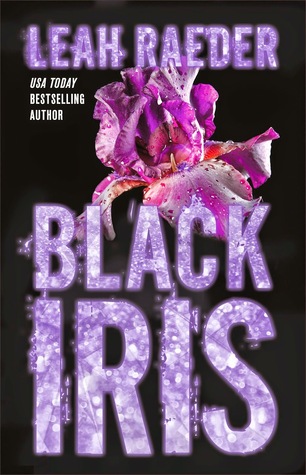
Book Review: BLACK IRIS by Leah Raeder

Photo credit: Goodreads
So about partway through my reading of Leah Raeder’s Black Iris, I knew I was going to have to review it, but it quickly became apparent it was going to be a tougher book to review. Not because I didn’t like it, but because it was so different from anything I’d read in a long time and just felt important, somehow. Like this was an important book for me to be reading. It’s hard to explain.

Before I go on, here’s the summary from Goodreads:

“It only took one moment of weakness for Laney Keating’s world to fall apart. One stupid gesture for a hopeless crush. Then the rumors began. Slut, they called her. Queer. Psycho. Mentally ill, messed up, so messed up even her own mother decided she wasn't worth sticking around for. 
If Laney could erase that whole year, she would. College is her chance to start with a clean slate. 
She's not looking for new friends, but they find her: charming, handsome Armin, the only guy patient enough to work through her thorny defenses—and fiery, filterless Blythe, the bad girl and partner in crime who has thorns of her own. 
But Laney knows nothing good ever lasts. When a ghost from her past resurfaces—the bully who broke her down completely—she decides it's time to live up to her own legend. And Armin and Blythe are going to help. 
Which was the plan all along. 
Because the rumors are true. Every single one. And Laney is going to show them just how true. 
She's going to show them all.”

So first and foremost, Black Iris is a New Adult novel, but holy guacamole it is so very different from 99% of NA novels out there right now. Black Iris is not a contemporary romance—it’s a dark, unsettling Thriller with deeply twisted characters and tons of twists. It’s the kind of book I feel like I’ll need to re-read to fully absorb, because it isn’t until all the pieces fall together that it really all begins to make sense.

Like Unteachable, Raeder expertly weaves a raw, realistic voice with moments of beauty and clarity. The characters are flawed and make few attempts to be likable—and there were some moments where I almost felt like Laney, the protagonist, was getting a little heavy-handed on deliberately portraying herself as unlikable (not so much through actions, but through things she would say about being an unlikable heroine). That said, I liked that many of the characters weren’t trying to be likable—they made ugly decisions, and had terrible thoughts, and they owned them completely.

The only other thing that occasionally threw me off was the timeline. The story is told non-chronologically with chapters jumping back and forth between the present and past, which occasionally got a little confusing (one of the reasons, I suspect, I felt like I would benefit from a second read).

Despite that, I really loved this book. From the gripping plot, to the out-there-for-you-to-see ugly emotions, to a protagonist who wasn’t completely sure about her sexual identity (and wasn’t trying to be sure or put a label on it), to a cast of characters who were twisted, and layered, and all-around fascinating, Black Iris is on my list of favorites.

If you’re looking for a gripping, beautifully-written, dark, and complicated New Adult Thriller, I couldn’t recommend this one more. 4.5/5 stars to this seriously awesome book.

Diversity note: The protagonist doesn’t label herself, but is attracted to (and has on-the-page explicit relationships with) both men and women, and she also has borderline personality disorder. Other major characters are bipolar and have antisocial personality disorder, and two major characters are Persian (including one love interest).

Have you read Black Iris?

Twitter-sized bites: 
.@Ava_Jae gives 4.5/5 stars to BLACK IRIS by @LeahRaeder. Have you read this twisted, raw NA Thriller? (Click to tweet)
 
Looking for a dark, layered, and diverse NA Thriller? Check out BLACK IRIS by Leah Raeder. (Click to tweet)
Related Posts Plugin for WordPress, Blogger...