Showing posts with label Disability in Kidlit. Show all posts

Book Review: SIX OF CROWS by Leigh Bardugo

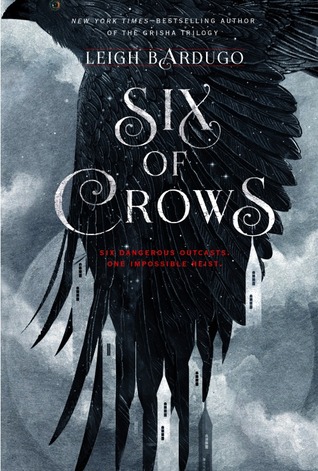
Photo credit: Goodreads
There are so many things I loved about this book.

Six of Crows has been on my TBR list pretty much since the moment it was announced because a) more Grisha and b) Leigh Bardugo, and this book totally lived up to my expectations. But before I go on about how amazing it is, here's the Goodreads summary:

"Ketterdam: a bustling hub of international trade where anything can be had for the right price—and no one knows that better than criminal prodigy Kaz Brekker. Kaz is offered a chance at a deadly heist that could make him rich beyond his wildest dreams. But he can't pull it off alone... 
A convict with a thirst for revenge. 
A sharpshooter who can't walk away from a wager. 
A runaway with a privileged past. 
A spy known as the Wraith. 
A Heartrender using her magic to survive the slums.

A thief with a gift for unlikely escapes.


Kaz's crew are the only ones who might stand between the world and destruction—if they don't kill each other first."

Right, so first and foremost, the question I've seen most about this book is whether or not it can be read without having read the Grisha trilogy. The answer is yes—pretty much everything is explained, and the only downside is you'll come across a few spoilers. But if you don't mind, Six of Crows is definitely understandable without previous Grisha universe knowledge.

I'll admit the first couple chapters were a little slower than I tend to like, pace-wise, but the story drew me in very quickly after that. I totally loved the vibrant Ketterdam and Fjerda setting, and I thought it was really cool that we got to see parts of the Grishaverse only mentioned in the previous books. The cast of characters are super diverse and I found that each POV (Kaz, Jesper, Inej, Matthias) were really interesting and drew me in for separate reasons, which was great because frequently in multi-POV novels, some POVs are more interesting than others, but I thought these were equally balanced.

Then the plot! The whole heist narrative was so ridiculously fun to read—it was incredibly smart and clever and I loved all the twists and wrenches in the plan. It reminded me very much of the Artemis Fowl series, in that the heist plot was super elaborate was unlikely odds and high stakes and the mastermind behind the plan (Kaz) repeatedly impressed me with his ability to think his way out of many problems.

And so many ships! I loved all the pairings in Six of Crows and was cheering for every single ship with equal fervor (which, when you have six mains/major characters, is impressive since again, I didn't find myself massively favoring one character or POV over another).

And finally, the thing I loved most—hello disabled protagonist in genre fiction! I actually didn't realize Kaz was disabled until after I bought the book, which was a really nice surprise. His disabilities (PTSD and chronic pain that causes a limp and necessitates the use of a cane) were very much part of the story and he didn't require a miracle cure to get around them—Kaz dealt with his disabilities in very real ways and I totally loved how he leveraged his cane to his advantage in various circumstances.

All in all, this book hit a home run. If you like fantasy and heist books or just really enjoyed the Grisha trilogy, I couldn't recommend this one more.

Now to wait impatiently for September when the second (and final) book, Crooked Kingdom, releases...

Diversity note: Kaz, one of the main protagonists, has chronic pain and a limp from an old injury and uses a cane to help him get around. He also deals with sometimes-debilitating PTSD. Another POV character, Jesper, is black and (slight spoiler) bisexual and (slight spoiler) Wylan also seems to like boys. 

Format note: I'm sure this book is equally excellent in e-book, but if you're able to get the print hardback, I do recommend it. It's one of the most beautifully designed books I own.

What have you been reading? 

Twitter-sized bites:
.@Ava_Jae gives 5/5 stars to SIX OF CROWS by Leigh Bardugo. Is this clever fantasy heist book on your TBR list? (Click to tweet
Looking for a smart YA Fantasy w/ a disabled MC? Check out SIX OF CROWS by Leigh Bardugo. (Click to tweet)

The Problem with Superpowered Disabled Characters

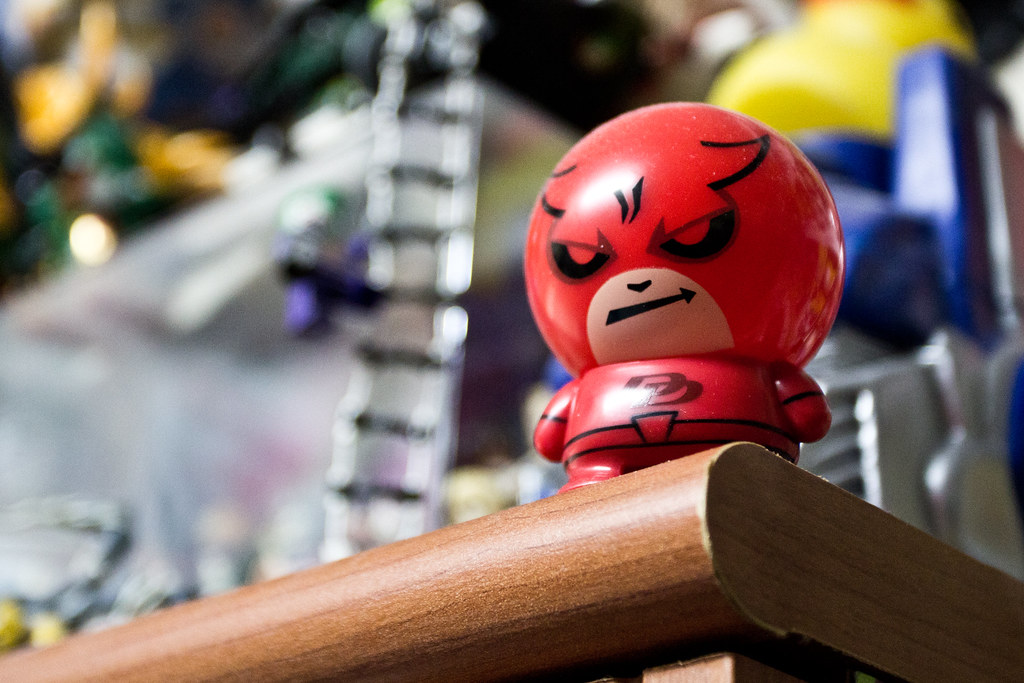
Photo credit: joo0ey on Flickr
So after responding to a long comment on my Lack of Chronic Illness Rep in YA post, I tweeted a little about my frustration with some of the counter-arguments brought up in opposition to the post, including that vampirism/lycanthropy could be considered chronic illnesses (which, by the way, I disagree with for many, many reasons).

This post isn’t about that, exactly, but while I was tweeting about it, @Holly1994 brought up a point that really resonated with me, in that she compared claiming vampirism/lycanthropy is a chronic illness is similar to all those blind characters out there who have superpowers that totally negate their blindness.

Which…got me thinking about how so very common it is for disabled characters to have superpowers that totally erase their disability.

The biggest and easiest example here, of course, is Daredevil—a character who is blind, but whose superpowered senses are so enhanced that he can see through sound, sort of, so he’s blind but…not really. He can still navigate with little difficulty and fight crime and be a total badass due to his ability to sense things around him in precise detail.

I looked up some other examples and found quite a few (by the way, some of the source links have super ableist language, JSYK):

  • Dr. Mid-Nite: blinded by an explosion, but can see in pitch blackness for some reason, so he wears special super-dark goggles so he can see during the day—and fight crime at night. 

  • Captain Marvel, Jr: character who has some kind of physical disability that makes mobility difficult, but can transform into an able-bodied superhero to fight crime before transforming back into his non-superhero, disabled self. 

  • Thor: Apparently in the 1962 comics, Thor also had the transform thing: his “human” self needed a mobility aid to get around (a cane) because Odin wanted to teach him a lesson in humility (which is majorly problematic for entirely different reasons, but I digress), but he could transform into Thor, who is able-bodied, to be a hero. 

  • Iron Man: in the comics, Tony Stark is injured and becomes paraplegic—but he can still move his legs and fly around as Iron Man in his suit, and apparently the comic writers got tired of writing him as disabled and cured him with a biochip implant. 

  • Komodo: A bilateral amputee graduate student who stole The Lizard’s (from Spider-Man) serum to regrow her legs and became a trainee Avenger. 

  • Doctor Strange: apparently a car accident resulted in nerve damage that caused the loss of use of his hands—until he found magic and became a sorcerer. (EDIT: I've been told that possibly Doctor Strange doesn't need use of his hands to perform magic because...it requires less dexterity or something? I'm not familiar with the story, so not sure, but possibly this might be okay.)

I’m sure there are other examples, but you get the idea.

The problem here is exactly what I mentioned above: their superpowers directly negate their disabilities. Physically disabled characters are suddenly able-bodied again, because, apparently, they couldn’t be superheroes otherwise.

Of course, there are examples of superheroes who’s abilities don’t negate their disability–Professor X, for example, who is paraplegic and telepathic—but his telepathy doesn’t make him able to walk again. And Hawkeye who (eventually, at least) is deaf and learns sign language to better communicate—but his supernaturally good aim doesn’t negate the fact that he can’t hear.

Right now at least, I don’t personally have a problem with disabled superheroes whose powers don’t erase their disability. I think it’s cool that many disabled kids may be able to see a character like them who is superpowered and badass but still has to deal with the same difficulties they do with their disability.

However, the narrative of superpower-erasing-disability is so very common, and that is a problem. Because the implication is the only way to make this disabled character awesome is to make him able-bodied. Because people then point to those characters and say there’s your disability representation—you have enough representation already. Because they are, in essence, saying what makes those characters cool is the way they can erase their disability with superpowers.

And that’s not fair. Because it totally erases difficulties disabled people have to wrestle with while still claiming to be representative.

We need more disabled characters—and I want to see them save the world, and hunt down killers, and go to magical schools, and lead revolutions. I want to see them be totally awesome, and get the hot love interest, and be heroes.

But I also want to see them struggle with their disability. I want to see them get frustrated, and deal with ableism, and have bad days and good days. I want to see them take medication, and if their condition is degenerative I want to see them get worse, and be uncertain about the future, and not have a good answer for what life will be like in five, ten years. I want them to deal with their disability in real, tangible ways. I want it to affect their everyday lives, I want their disability to be visible and invisible, and I want it to matter.

But I also want to see them live. I want to see them get by just fine, and be the hero, and I want them to be an inspiration because they do incredible things—not because they’re disabled—and I want their disability to be normalized.

Everyone deserves to see themselves represented, and for the disabled, that means in a way that doesn’t totally erase everything that makes them disabled to begin with. Everyone deserves to see themselves as heroes without being told the only way to do so is to erase their reality.


Twitter-sized bites:
What's the problem with superpowers erasing disabilities? @Ava_Jae breaks it down. (Click to tweet
"Everyone deserves to see themselves as heroes without...eras[ing] their reality." (Click to tweet)

Diverse Books Resource List

Photo credit: Yours truly
Being part of the online bookish community and very much supportive of the We Need Diverse Books movement, I've seen a lot of really amazing lists of diverse books for readers to easily find. It occurred to me, however, that most of these lists are pretty scattered all over the interwebs, and so it might be good to put a bunch of them together on the same page to make it easy for readers looking for all manner of diverse books to be able to go to one place. 

Thus the idea was born! And I started searching. 

While this is by no means an exhaustive list, I was able to find a pretty sizable amount of really awesome curated lists that bring attention to books with representation all across the board. I'll try to update this post as I see new lists, but this is what I have so far and I think it's a pretty decent start. :)

The whole list is organized alphabetically. Enjoy! 

Disability lists:


Race, Ethnicity, & Religion-related lists:


QUILTBAG+ lists:


Lists that reach across categories:

* = suggested from readers! Thanks, guys! :)

Where do you go to find diverse books?

Twitter-sized bite: 
Looking for places to find diverse books? @Ava_Jae puts together resources to find representation across the board. (Click to tweet)
Related Posts Plugin for WordPress, Blogger...