Vlog: On Writing Description

You've asked, I'm answering: how do you write description? How much description is too much or too little? I'm sharing my thoughts on this essential part of novel writing.


RELATED VLOGS:


What tips would you add for writing description?

Twitter-sized bites:
How much description is too much? How much is too little? @Ava_Jae vlogs some tips. (Click to tweet
Struggling to get your description right? @Ava_Jae shares some tips in today's vlog. (Click to tweet)

What Should You Focus On While First Drafting?

Photo credit: Brian Stetson on Flickr
I've frequently talked about how first drafts are meant to be terrible, and how I worry about nothing while first drafting except getting the story down. I've said time and time again that anything messy in the first draft can be fixed with revisions, but you can't edit a blank page, so getting the words down first is the most important thing.

But what's involved in "getting the story down"? What should you focus on getting on the page, rather than saving it for later?

As is the case with many things in writing, this answer is going to vary writer-to-writer. But after completing sixteen first drafts, this is what I've learned to focus on while getting the story down for the first time:

  • The plot. Technically I worry about this while plotting, not first drafting, but the first draft is where I take note of whether or not the plot is working as it should be. A lot of times I can't really tell for sure whether the plot is working the way I wanted it to until the first read through and revisions, but while first draft I at least get a sense of the flow and the way one scene leads into another and how they stack up together.

  • The characters. The first draft is really where I get to know the characters for the first time. This is where their personalities start to shine, where their interactions with other characters tells me about them, where I get glimpses into who they are and what makes them tick. By the end of the first draft, I don't have a full picture of my full cast of characters, but I usually have a pretty good idea of how the main cast behaves and how they get along (or don't). 

  • The story. Ultimately, the first draft is where I follow a lot of gut feelings. It's not uncommon for my plotted scene card to say one thing and the scene itself to turn out another way entirely. Arguments happen where I didn't plan them—and so does kissing—flirting crops up between characters I didn't expect, and sometimes new plot ideas hit me along the way. I pretty near always follow those gut instincts and go wherever the story takes me, regardless of whether or not I'd planned for it before. And sixteen first drafts later, I've yet to regret going with what felt right as I wrote rather than with what I'd originally planned.

So those are the main things I try to keep in mind when putting words on the page for the first time. What do you focus on while first drafting?

Twitter-sized bite:
What do you focus on while first drafting? @Ava_Jae shares some experience and thoughts. (Click to tweet)

7 Diverse Fall 2017 Books I'm Psyched About

Somehow, the fall 2017 publication season is not that far away. Earlier in the year I did a diverse books for 2017 post, but I only covered the first half of the year, so now it's time to take a look at the books going forward that sound amazing.

I've been psyched about most of these for quite some time. Because they sound incredible.

Without further ado, here are seven I'm looking forward to:


Photo credit: Goodreads


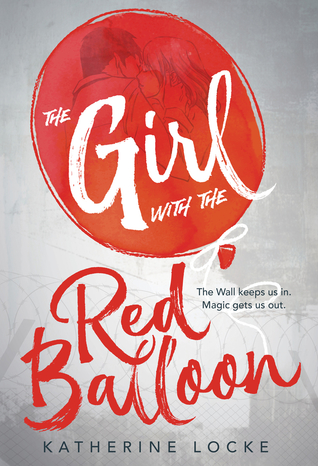
The Girl with the Red Balloon by Katherine Locke (September 1)
YA Historical Fantasy

Goodreads summary:

"When sixteen-year-old Ellie Baum accidentally time-travels via red balloon to 1988 East Berlin, she’s caught up in a conspiracy of history and magic. She meets members of an underground guild in East Berlin who use balloons and magic to help people escape over the Wall—but even to the balloon makers, Ellie’s time travel is a mystery. When it becomes clear that someone is using dark magic to change history, Ellie must risk everything—including her only way home—to stop the process."

Diversity note: Ellie is Jewish (#ownvoices).


Photo credit: Goodreads


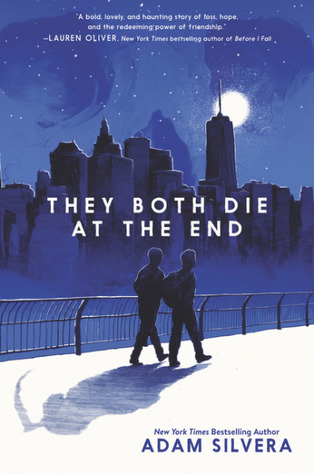
They Both Die at the End by Adam Silvera (September 5)
YA Contemporary

Goodreads summary:

"On September 5, a little after midnight, Death-Cast calls Mateo Torrez and Rufus Emeterio to give them some bad news: They’re going to die today. Mateo and Rufus are total strangers, but, for different reasons, they’re both looking to make a new friend on their End Day. The good news: There’s an app for that. It’s called the Last Friend, and through it, Rufus and Mateo are about to meet up for one last great adventure—to live a lifetime in a single day."

Diversity note: Mateo (and possibly Rufus?) are Latino, and I'm guessing they are queer boys too (#ownvoices).


Photo credit: Goodreads


Mask of Shadows by Linsey Miller (September 5) 
YA Fantasy

Goodreads summary:

"Sallot Leon is a thief, and a good one at that. But gender fluid Sal wants nothing more than to escape the drudgery of life as a highway robber and get closer to the upper-class―and the nobles who destroyed their home.  
When Sal steals a flyer for an audition to become a member of The Left Hand―the Queen's personal assassins, named after the rings she wears―Sal jumps at the chance to infiltrate the court and get revenge.

But the audition is a fight to the death filled with clever circus acrobats, lethal apothecaries, and vicious ex-soldiers. A childhood as a common criminal hardly prepared Sal for the trials. And as Sal succeeds in the competition, and wins the heart of Elise, an intriguing scribe at court, they start to dream of a new life and a different future, but one that Sal can have only if they survive."

Diversity note: Sal is gender fluid.


Photo credit: Goodreads

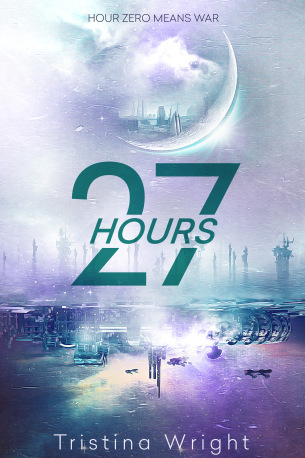
27 Hours by Tristina Wright (October 3)
YA Sci-Fi

Goodreads summary:

"Rumor Mora fears two things: hellhounds too strong for him to kill, and failure. Jude Welton has two dreams: for humans to stop killing monsters, and for his strange abilities to vanish. 
But in no reality should a boy raised to love monsters fall for a boy raised to kill them.
Nyx Llorca keeps two secrets: the moon speaks to her, and she’s in love with Dahlia, her best friend. Braeden Tennant wants two things: to get out from his mother's shadow, and to unlearn Epsilon's darkest secret. 
They’ll both have to commit treason to find the truth. 
During one twenty-seven-hour night, if they can’t stop the war between the colonies and the monsters from becoming a war of extinction, the things they wish for will never come true, and the things they fear will be all that’s left."

Diversity note: I've heard the representation includes characters who are bisexual (#ownvoices), gay, pansexual, asexual, trans, deaf, and POC.


Photo credit: Goodreads

Not Your Villain by C.B. Lee (October 5)
YA Fantasy (Graphic novel)

Goodreads summary:

"Bells Broussard thought he had it made when his superpowers manifested early. Being a shapeshifter is awesome. He can change his hair whenever he wants, and if putting on a binder for the day is too much, he’s got it covered. But that was before he became the country’s most-wanted villain.

After discovering a massive cover-up by the Heroes’ League of Heroes, Bells and his friends Jess, Emma, and Abby set off on a secret mission to find the Resistance. Meanwhile, power-hungry former hero Captain Orion is on the loose with a dangerous serum that renders meta-humans powerless, and a new militarized robotic threat emerges. Everyone is in danger. Between college applications and crushing on his best friend, will Bells have time to take down a corrupt government?

Sometimes, to do a hero’s job, you need to be a villain."

Diversity note: Bells is a trans guy.


Photo credit: Goodreads

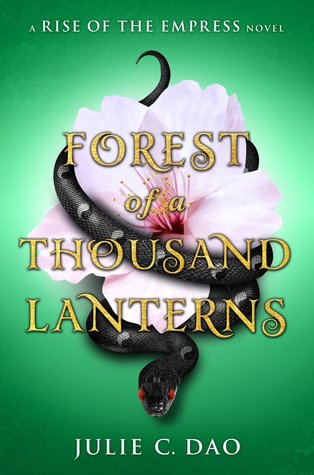
Forest of a Thousand Lanterns by Julie C. Dao (October 10)
YA Fantasy

Goodreads summary:

"Eighteen-year-old Xifeng is beautiful. The stars say she is destined for greatness, that she is meant to be Empress of Feng Lu. But only if she embraces the darkness within her. Growing up as a peasant in a forgotten village on the edge of the map, Xifeng longs to fulfill the destiny promised to her by her cruel aunt, the witch Guma, who has read the cards and seen glimmers of Xifeng's majestic future. But is the price of the throne too high? 
Because in order to achieve greatness, she must spurn the young man who loves her and exploit the callous magic that runs through her veins--sorcery fueled by eating the hearts of the recently killed. For the god who has sent her on this journey will not be satisfied until his power is absolute."

Diversity note: This is an #ownvoices East Asian fantasy reimagining. 


Photo credit: Goodreads

Whichwood by Tahereh Mafi
MG Fantasy

Goodreads summary:

"Our story begins on a frosty night… 
Laylee can barely remember the happier times before her beloved mother died. Before her father, driven by grief, lost his wits (and his way). Before she was left as the sole remaining mordeshoor in the village of Whichwood, destined to spend her days washing the bodies of the dead and preparing their souls for the afterlife. It’s become easy to forget and easier still to ignore the way her hands are stiffening and turning silver, just like her hair, and her own ever-increasing loneliness and fear. 
But soon, a pair of familiar strangers appears, and Laylee’s world is turned upside down as she rediscovers color, magic, and the healing power of friendship. "

Diversity note: This is an #ownvoices dark Persian fantasy. 


So that's a sampling of the books I'm psyched for this fall. What diverse falls books are you looking forward to? 

Twitter-sized bite:

What diverse books releasing this fall are you psyched about? Join the discussion on @Ava_Jae's blog. (Click to tweet)

How to Translate the Story in Your Head Into Words on the Page

Photo credit: Victoria Nevland on Flickr
The first step is understanding this is going to be a long process—and the end result may still look different than what you're picturing right now, and that's okay.

Next is understanding you'll never get that book you're imagining onto the page if you don't throw words on the page. And look, during that first draft, the words are not going to line up perfectly to that story you're imagining. A lot of times, the words are going to look pretty unrecognizable compared to what you want the end result to look like.

But the thing is, that's okay. The first draft, in many cases, is going to look like a steaming pile of garbage when you try to compare it to the masterpiece you imagined. Or at the very least it'll look like a pile of rubble you have to somehow sift through and rebuild before it'll start looking like the end result you want.

But again, that's to be expected. As I frequently remind myself, you can't edit a blank page. So fill those pages with words.

Once you've finished the first draft, it'll be time to take a break. How long is up to you—I like to take a month when I can, and even better if I can fill that month with other words—whether from another project, or from books. The goal is to remember as little as possible when you return to the manuscript, because the less you remember, the fresher it'll feel, and the fresher it'll feel, the easier it'll be to see the flaws.

Which, yeah, is the next step. Eventually time will come to pick up your manuscript and read it critically. This is the moment when you're going to see just how far the distance is from the book in your head to the book currently on the page. And it means paying attention to that distance and taking note of all the things you need to do to bring your manuscript closer to what you wanted it to be.

But more than that—it means being open to ways you could make it better than what you originally planned, too. Maybe the story took a turn you weren't expecting, or a character demanded more spotlight than your original plan. Maybe you have some potential possibilities you could expand on that would support your story and make it bigger—don't be afraid to go for those too. Sometimes big changes you weren't expecting are the best thing for the manuscript.

You'll have to revise on your own and decide what changes to go with. You'll have to put a lot of time and effort and emotion and know at the end, when you're tired and the manuscript is looking better—you're nowhere near done.

Because eventually will come time to work with others. Critique partners. Agents. Editors. And they'll all introduce ideas and possibilities you hadn't thought of. Some of them will bring them closer to the book you originally imagined. Some of them won't—but the different end point will be even better than you imagined. Be open to those ideas, and consider them carefully as you decide what to go with and what to ignore.

Writing a book is an evolutionary process. Very rarely do I end up with a final manuscript that looks exactly like I originally imagined—it's pretty near always better. Because by challenging myself to push harder, to explore that character and plot thread, to try something risky I hadn't originally imagined, I can build on the story in ways I hadn't imagined when I first got that story idea.

Eventually, you'll translate the story in your head into words on the page. And the story won't be the same, not really. But that's a good thing.

Have you ever experienced the evolution of story? 

Twitter-sized bites:
How do you translate the story in your head into words on the page? @Ava_Jae shares some thoughts. (Click to tweet)

Vlog: How to Choose Tense & Perspective

Choosing tense (past, present) and perspective (first, third) can be pretty tricky and varies manuscript to manuscript. Many of you have asked how to choose, so today I'm answering—or at least, answering how *I* choose.


RELATED LINKS:


How do you choose tense and perspective of a WIP?

Twitter-sized bite:
Past or present tense? First or third person? How do you pick? @Ava_Jae vlogs on choosing tense & perspective. (Click to tweet)

On Writing Careers and Fear

Photo credit: zoxcleb on Flickr
I'm the kind of person who likes—and often needs—to plan things out in advance. Whether it's plans to go out, plans for work, plans for trips, etc. I'm a planner both with my manuscripts and my everyday life. Planning makes me feel grounded, and allows me to prepare for what to expect for the day. It leaves me with a sense of solid surety that I can handle today's tasks.

While there are certain big things I can plan—my education, for example, and large life decisions that are under my control—a writing career is not one of them.

Sure, I can plan for things on my end—how many manuscripts I'll write this year, and in what order, and when I'll aim to have things ready for my critique partners and agent. I can plan my manuscripts themselves and set up a pipeline of the next five to ten books I'll work on, assuming I come up with that many ideas. There are things even in a writing career that I can control and plan—but my career itself? The reviews I get, what books are published, when they're published, my advance, my royalties, what rights sell, etc.—those things, while they directly affect my life—are completely out of my control. I can't predict them. I can't plan.

Similarly, there are things I can't predict and plan for when writing a manuscript, either. Even though I plot every scene upfront, I can't really accurately predict how long the manuscript will be. I also can't plan for how the writing will turn out, or what characters will need work in revision, or what plot points I'll need to rework. I can't plan for whether the manuscript takes me longer than expected due to life or health things, and I can't plan for whether my CPs, my agent, or my editor (or new editors!) will like my work.

And you know? It's scary.

It's scary knowing that the truth is, I just don't know. It's scary thinking that I can put my heart and soul into a book and some people will still hate it. It's scary considering that much of my writing career is really and truly out of my hands—that what happens after I write the end largely depends on other people.

For unpublished writers, it's scary thinking this manuscript you're working on may never be published. It's scary sending out query letters and knowing chances are likely you'll get a bunch of rejections before you hear good news. It's scary wondering whether you'll ever finish this manuscript, whether you'll ever get to the query stage to begin with. And it's scary knowing even if you get an agent, even if you get published, you may be writing and publishing for a long time before you're making anywhere near a living wage from your writing.

On my end, I've learned to cope with the unpredictability of my career by setting the bar ridiculously low. When budgeting, for example, I don't factor in my writing income at all—so anything I do get is a bonus and I'm not fretting over when my next writer paycheck will come in because I've already figured out how to pay my bills without it. Though I've got lots of projects in the works, I don't assume any of the ones not under contract will ever sell—in fact, I tend to assume the opposite until I have an actual offer. It's a defensive mechanism to not get my hopes up, but it also allows me to plan other aspects of my life without trying to rely on a career that, quite frankly, I can't even begin to predict.

Writing and a writing career is scary, especially when you're like me and don't feel grounded without a plan. But in my experience at least, it's also incredibly rewarding.

I may not know what my life will look like in five years—at least, not with the writing aspect—and I may deal with frequent fears when it comes to my writing career. But fear and writing is just part of the process, and though it never goes away, it is something you learn to cope with, one day at a time.

What writer fears do you deal with? 

Twitter-sized bite: 
The unpredictable nature of a writing career is scary. But it's possible to learn to cope with it. (Click to tweet)

Are YA and Adult Category Books That Different?

Photo credit: irvingpublic on Flickr
The short answer: yes.

The long answer:

It always frustrates me when adults talk about YA like YA are the same as Adult books but without certain things and with a splash of angst. It's such a simplistic—and largely inaccurate—way of talking about the category, and yet adults say things along those lines all the time.

The thing is, those analyses couldn't be farther from the truth. When adults say YA is the same as Adult but without sex (wrong) or without f-bombs (ha ha ha ha), they're basically saying YA is a pared down version of Adult category books, but that's a fundamental misunderstanding of what YA is.

There are a lot of differences between YA and Adult, many of which are why even though I'm an adult, I tend to prefer YA over Adult category books. Some of these differences include:

  • The voice. YA voices are so different from Adult—and they should be! Told from teen perspectives, for teens, YA voices are (understandably) younger, and they're also often more emotionally charged. Teens get overwhelmed more easily, and they see the world differently than their adult counterparts. The lows are often lower and the highs are often higher—because when you're a teen, emotions are often all over the place and things feel like a bigger deal. The teen perspective is fundamentally different from the adult perspective, and this is reflected in the narrative. 

  • The pacing. Along with the voice, this is one of my favorite things about YA—the pacing is often much faster than adult category books. Use whatever reason you'd like to explain it, but the result is YA books tend to be quickly paced reads that get you into the meat of the story quickly while laying down the foundation of the story world along the way. 

  • The outlook. Understandably, teens don't see the world—or their lives—the same way adults do. Adults are largely focused on the future—their careers, families they may or may not want to build, their aspirations, bills, etc. Teens, meanwhile, are much more focused on the now. They're often not worried about what their lives will look like in five, ten years because they're too busy trying to handle what their lives are throwing at them in the moment. To teen protagonists, what's frequently the most important is what's happening right now.

  • The impact. YA is for teens. Period. It's totally fine that adults enjoy reading YA too—why wouldn't they, the books are fantastic! But the thing to always remember is YA isn't for adults, it's for teens, and it always will be. So ultimately, the impact of YA books is in the teen community. The messages and themes and examples the books give can (and do) ultimately affect the way teens see themselves, others, and the world. So to me, at least, the stakes are much higher in impact in YA, because YA authors are sharing their stories with a group that is growing and developing along the way. 

There's sex in YA, sometimes graphic (Carrie Mesrobian books, anyone?). There's swearing in YA, and a lot of it. Ultimately, what separates YA from adult category books is much deeper than surface-level content differences, and a failure to recognize that is often what (mis)leads adults into trying to claim YA for themselves. But YA isn't for adults and it never has been—and that's important to recognize and remember. 

What do you think? What differences between YA and adult category books would you add to the list? 

Twitter-sized bite:
Are YA and Adult category books that different? @Ava_Jae says yes—and that's a good thing. (Click to tweet
Related Posts Plugin for WordPress, Blogger...