Guest Post: Why Do You Write? by Rafia Khader

Photo credit: freestocks.org on Flickr
Why do you write?

Sure, you love to write. But have you ever asked yourself why you love to write?

If you’re anything like me, writing might be the only way you feel you can communicate with others. As someone who is both shy and introverted, writing is not a choice. It’s a compulsion. Writing allows me the space to be myself and truly be heard.

I grew up feeling alone, not resonating with any of the narratives I saw around me as a child and as an adolescent. To a certain extent, I still feel that way as a thirty-year old.

I am a former overweight, Canadian-born, Muslim woman of Indian ethnicity living in a post-9/11 America.

You can imagine how middle and high school must have been like for me. I’ll give you a hint: I wasn’t a popular kid. It wasn’t just that I was different - I felt invisible. One of my closest friends in high school didn’t even know I was Muslim until senior year.

The issues that are important to me aren’t the issues most people seem to care about. Even within the different communities I am a part of, I feel like an outlier.

I don’t fit in with any of the narratives that surround me.

But I want to desperately fit in.

So, that’s why I write. Because when I do so, I get to create my own narrative. I fit in in the world that I create.

Even though most people will probably never understand my enthusiasm for the Oxford Comma, or why I am so obsessed with coming up with the perfect plot line for that book I just need to write, I know why I write and why I must continue to do so.

Writing has been a constant companion for me when (most of) the rest of the world told me I didn’t belong.

So, why do you write? Maybe all that you’ve been through is pointing you in the direction you must now go. I know that the unique experiences I’ve had will inform the kind of book I write. And maybe that’s exactly what the world needs. Are you willing to share your story with the rest of the world?


Rafia Khader is a writer, blogger, and aspiring novelist with a penchant for cake and cows. She shares her reflections on life, faith, marriage, and writing - all with a dash of humour - on her blog Cake & Cows


Twitter-sized bite:
Why do you write? Rafia Khader shares why she puts words on the page—join the discussion on @Ava_Jae's blog. (Click to tweet)

Guest Post: So You’ve Been Called Out—How Not to Make It Worse by Jennifer Austin

Photo credit: guidancefs on Flickr
I’ve seen a number of incidents—mostly plastered all over Twitter—involving an author being called out for bad representation in their book, or possibly something they’ve said online. I’m not going to get into the topic of calling it “mob mentality” (don’t do that) or blaming the critiquers for their “nasty tone” instead of just listening to what is being said (don’t do that either.) But I think a guide for authors in this situation might be somewhat helpful.

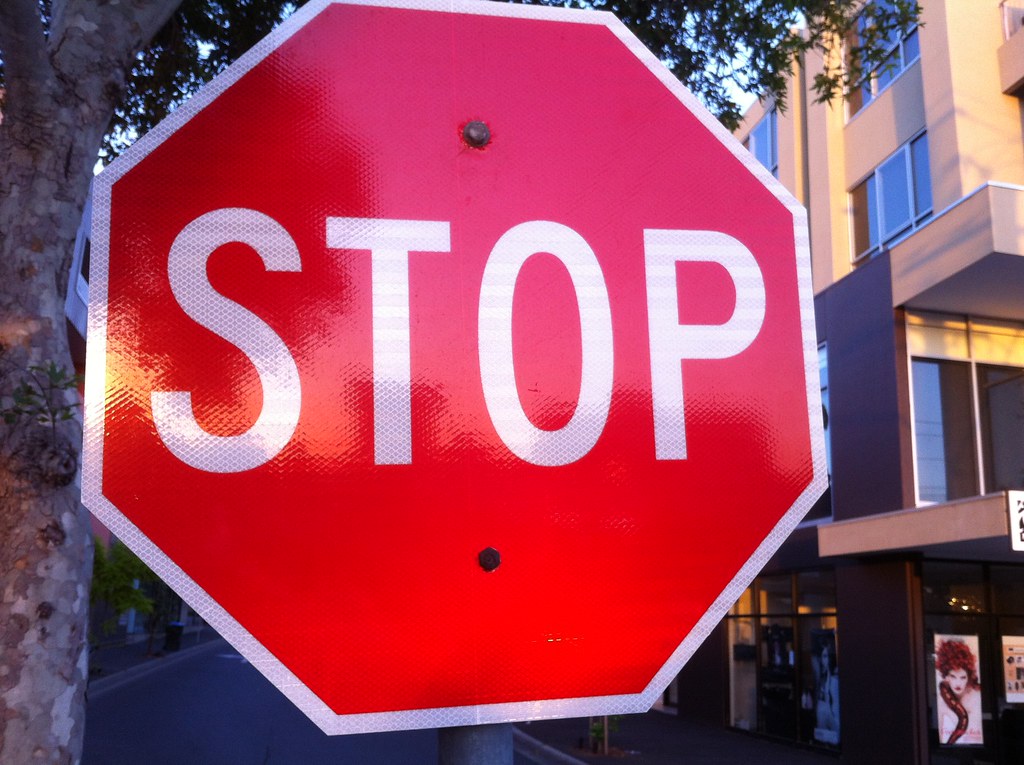
  1. STOP: Whatever thought just came to the top of your head, just stop. Don’t tweet. Don’t blog. Don’t comment. If someone is calling out your words, there’s a reason, even if you don’t agree with it. So stop. Don’t respond.

  2. LISTEN: It may not be possible for you to read the critiques (think of them as critiques, not attacks.) They can hurt, and some of us don’t have the mental well-being to handle those comments unfiltered. So ask a friend to do it and give you an overview. Someone feels hurt. Your words caused it. You need to know why.

  3. APOLOGIZE: This is hard to do, but do it. Apologize. On Twitter, on your blog, whatever avenue you have open to you. Don’t turn it into “this was my intent so don’t be mad at me” post. It’s okay to explain yourself, but that needs to be very secondary to apologizing for the hurt you’ve caused and promising to do better next time. 

  4. LEARN: This might be the most difficult part. You have to learn from your mistake. Maybe your intent wasn’t to hurt anyone, but you did. You need to learn why, through listening to what they have to say and doing more investigation into the particular aggression you committed. Our internal biases are built on years of society telling us untrue things. We’ve been propped up and rewarded for believing some hurtful crap. It’s time to unlearn those biases. Google the subject matter at hand. Explore the countless writing resources out there that explain some of the very microaggressions we writers fall into without meaning to. But it is imperative that we learn and do better, otherwise we are just fulfilling an endless cycle of hurt and anger for all parties involved.

We have an obligation to our readers to provide the best books and social media profiles that we can, and this includes supporting readers of many different identities. Identities we may not share, but choose to write or talk about. We have a long reaching power to affect teens with our words. Alienating them, hurting them, causing them to question who they are, is not what I want to do with that power. I’d rather show them the love and support they need and deserve. Let that be your literary legacy.

What do you think?

Jennifer Austin is a YA writer who used to keep her little sisters up at night by telling them long, fantastical stories. Now she writes them down. And lets her family sleep. She can most often be found sitting in a patch of sunshine weaving new worlds, or trying to make sense of the current political one. Find her at Jennifer Austin-Author or @JLAustin13

Twitter-sized bite:
So you've been called out—@JLAustin13 talks about how not to make it worse on @Ava_Jae's blog. (Click to tweet)

Vlog: How to Write Transitions

Navigating the space between scenes can sometimes be a little perplexing. So today I'm talking about a vital part of novel-writing—how to write transitions.


RELATED VLOGS:


What tips would you add for writing transitions?

Twitter-sized bite: 
Struggling to smoothly connect the dots between scenes? @Ava_Jae vlogs tips for writing transitions. (Click to tweet)

Guest Post: On the Importance of Working with the Right CPs by Mary Kate Pagano

Photo credit: Thomas Hawk on Flickr
Critique partners: critical to the writing process. But we all know that by now, don't we?

I wanted to talk about finding the right critique partners for you. Specifically, how important it is to ensure you're working with critique partners who are familiar with the kind of stuff you write.

I took a writing class not too long ago that was simply called "Novel Writing", so the students were people from all walks of life, writing all sorts of things. Each week we critiqued one person's submission; we went around the room and everyone said what they did and didn't like about it, and at the end, the writer got to ask questions.

It wasn't a terrible format, except that with the wide variety of people in the class, some of the critique I got was...less than helpful.

"I don't understand why anyone writes in the present tense," said one person. "It doesn't make sense to me. You're writing a story that already happened, so how can it be happening NOW?" 
"Your tone is too conversational," said another. "Like a kid talking." 
"I hate the first person," said a third.

There were some other criticisms, but you get my point. These people were not helpful, because my piece was an excerpt from a YA novel. And these people had never read YA literature.

This is an extreme example--though some of those people did reach out to me after the class was over to see if we could continue CPing, and I foolishly said yes because I didn't have any CPs yet!--but it just highlighted to me how hugely important it is to be working with CPs who know what you're going for.

I didn't last long working with those people. And it's clear to me now why.

YA literature isn't so drastically different from adult literature that I'm saying someone who reads or writes some adult can't be a good CP. They just need to also be familiar with YA. A category in which the first person and present tense are OF COURSE acceptable. Where the voice of the novel may sound conversational. Where coming-of-age themes are important.

Needless to say, I've been a bit pickier about who I work with on a CP basis now. And by the same token, when people reach out to me for CPing who write in a genre about which I know little (i.e. erotica, or someone even asked me once to critique a child's picture book), I think it's much better for both of us that I (nicely) turn them down.

How about you? Did you also make mistakes when first working with CPs? What have you learned?

Mary Kate Pagano has been voraciously reading and writing since she learned how, but it's only in the last six years or so that she's drummed up the courage to actually attempt to publish a novel. She has three finished YA manuscripts under her belt and will be querying all once she's satisfied with them (which is taking some time :) You can find her writerly and readerly musings over at www.wanderlustywriter.com and also catch her writerly and readerly (and sometimes random) tweets at https://twitter.com/wandrlstywriter.

Twitter-sized bite:
Working w/ CPs is important but @wandrlstywriter talks abt why working w/ the *right* CPs is essential. (Click to tweet)

Year SIX Blogoversary Celebration!

Today is May 5, 2017 and exactly six years ago tomorrow I posted my very first blog post on Writability. I'm so endlessly grateful for the reach this blog has built, and it's all thanks to your wonderful support over the years. So whether this is your first post here on Writability or 1,140th (I know, right?), my thanks goes out to you!

Every year I like to do a giveaway to thank you guys for your wonderful support, and this year is no different! This time around I've got eighteen critiques and nine books up for grabs, so whether you're a writer or reader (or both!) there's lots to win.

The way this is year's giveaway will work: critiques will each go to one different person (so that's fifteen winners!) and the books will go to eight winners (one winner will win two related books), so there will be twenty-seven winners total! Some book giveaways are US only, some are international, but it's all in the same rafflecopter—you'll just need to specify whether you live in the US or internationally when you enter. All of the critique giveaways are international.

Here are the incredibly generous authors and editors who donated prizes:


Laura Heffernan—Synopsis Critique (up to 1,000 words)

Laura Heffernan is living proof that watching too much TV can pay off. When not watching total strangers get married, drag racing queens, or cooking competitions, Laura enjoys travel, baking, board games, helping with writing contests, and seeking new experiences. She lives in the Northeast with her amazing husband and two furry little beasts.


Briana Morgan—2 Query Critiques

Briana Morgan is a YA and NA writer, editor, and blogger who loves dark, suspenseful reads, angst-ridden relationships, and complicated characters. Her interest in Jay Gatsby scares her friends and family. You can find her in way too many places online, eating too much popcorn, reading in the corner, or crying about long-dead literary heroes.


Gill Hoffs—Query Critique + Follow-up e-mail + Synopsis critique, if wanted

Gill Hoffs lives in the northwest of England with Coraline Cat and not enough chocolate. She is best known for her nonfiction books on weird Victorian shipwrecks (The Sinking of RMS Tayleur: The Lost Story of the 'Victorian Titanic', The Lost Story of the William & Mary: The Cowardice of Captain Stinson - both published by Pen & Sword) and related appearance on BBC's Coast. Her short fiction and nonfiction is widely available online and in print, including Wild: A Collection (Pure Slush), and her as yet unpublished novels have been longlisted for the Virginia Prize and Mslexia Novel Competition.


Jackie Yeager—First Chapter Critique

Jackie Yeager is the debut author of THE CRIMSON FIVE: SPIN THE GOLDEN LIGHT BULB which will be released on January 2, 2018 by Amberjack Publishing. The middle grade story follows the tale of five eleven year-olds on a competitive adventure almost too good to be true. She lives in Rochester, New York with her husband and two teenagers.


Akemi Dawn Bowman—Query + First Chapter Critique

Akemi Dawn Bowman is the author of Starfish. She is also a Ravenclaw and Star Wars enthusiast, who served in the US Navy for five years and has a BA in social sciences from UNLV. Originally from Las Vegas, she currently lives in England with her husband, two children, and their Pekingese mix.www.akemidawnbowman.com Twitter: @akemidawn


Amelinda Berube—Query + First Chapter Critique

Amelinda Bérubé is the author of UNDER THE ICY LAKE, a YA ghost story coming from Sourcebooks Fire in 2018. She's spent the last ten years as a writer and editor with the Canadian public service, prior to which her career path meandered through academics, carpentry, and administrivia. Amelinda is a passionate fan of YA, SFF, and all things spooky and looks forward to participating in PitchWars 2017 as a mentor!


K Callard—Query + First Chapter Critique

K. Callard is the author of Fun with Frosting: A Beginner's Guide to Decorating Creative, Fondant-Free Cakes (Skyhorse, 2016). When she's not baking, she writes YA and MG, takes care of her kids, and geeks out (mostly over Harry Potter, all things Whedon, and adorable monsters). She is represented by Brianne Johnson of Writer's House.


Hayley Chewins—Query + First Chapter Critique

Hayley Chewins writes books about magical girls with secrets. Her debut, THE TURNAWAY GIRLS, is forthcoming from Candlewick and Walker Books in 2018. She has an MA in Writing for Young People from Bath Spa University and she’s represented by Patricia Nelson at Marsal Lyon Literary Agency.


Erica Cameron—Query + First Chapter + 1-4 Page Summary Critique

Erica Cameron is the author of books for young adults including the Assassins duology, the Ryogan Chronicles, and The Dream War Saga. She also co-authored the Laguna Tides novels with Lani Woodland. An advocate for asexuality and emotional abuse awareness, Erica also works with teens at a residential rehabilitation facility in her hometown of Fort Lauderdale.


Veronica Bartles—Query + First Chapter Critique OR $75 towards her Graphic Design Services

Author of TWELVE STEPS (YA), and THE PRINCESS AND THE FROGS (PB), has spent most of her life wondering “What If?” She believes there are many sides to every story, and she’s determined to discover every single one of them. Veronica believes every princess deserves a frog, because princes aren’t pets. And she’s an incurable optimist who loves gray, drizzly days because that’s when rainbows come out to play. 


Megan Manzano—First Six Chapters Critique

Megan Manzano is currently working on her first YA book and generally likes writing science fiction, fantasy, and the occasional contemporary piece. She doubles as an editor, both in the publishing and freelance world. You can follow her on twitter, @megan_manzano, where she discusses writing/editing tips, feely stuff about her characters and the characters of others, and reviews books.


Nicole Tone—First 50 Pages Critique

Nicole Tone is the Publishing Director at REUTS Publications, a freelance editor, and a writer of upmarket fiction, book reviews, and personal essays. You can find her on twitter at @nicoleatone or blogging about books and the editing process at http://www.nicoleatone.com.


Chelsea M. Cameron—First 50 Pages Critique

Chelsea M. Cameron is an international bestselling romance author from Maine. Her hobbies include pestering her cat for snuggles, tweeting, eating red velvet cake, drinking too much tea, and reading.


Gabrielle Prendergast—Query Critique + ARC of Zero Repeat Forever (US/CAN only)

Gabrielle Prendergast is the author of the award-winning and multi-nominated young adult novels in verse, Audacious and Capricious. Her next novel, Zero Repeat Forever comes out August 29, 2017 from Simon & Schuster. She lives in Canada with her family. Find her on Twitter at @GabrielleSaraP or her website www.gabrielleprendergast.com.


Kristi Wientgne—First 3 Chapter Critique + ARC of Karma Khullar's Mustache (International)

Kristi Wientge is originally from Ohio where she grew up writing stories about animals and, her favorite, a jet-setting mouse. After studying to become a teacher for children with special needs, she spent several years exploring the world from China to England, teaching her students everything from English to how to flip their eyelids inside out. She’s spent twelve years raising her family in her husband’s home country of Singapore. Karma Khullar’s Mustache is her debut novel.


Ava Jae—Query + First 30 Pages Critique + Signed HC of Beyond the Red (US only)

Ava Jae is a Latinx tomboy who writes YA speculative fiction featuring marginalized characters grappling with identity. Ava lives with a chronic illness, is a recent University of Michigan grad and runs a popular writing blog and YouTube channel, where they share writing tips and bookish ramblings with writers and readers. Ava is the author of the Beyond the Red trilogy (Skyhorse), and their next novel, Into the Black, will be released Fall 2017. 


Katherine Locke—Query + First 30 Pages Critique + Pre-order of The Girl With the Red Balloon (Amazon or B&N) + Signed Bookplate (US only)

Katherine Locke writes historical fiction with a heaping of fantasy. When not tending to the many needs of their feline overlords, they're tweeting, reading, or dreaming up the next story. Their YA debut, The Girl with the Red Balloon, releases on September 1, 2017. They're most often found on Instagram and Twitter as @bibliogato, or at www.KatherineLockeBooks.com


KB Wagers—Signed copies of Behind the Throne & After the Crown (International)

K.B. Wagers lives and runs in the shadow of Pikes Peak. She loves flipping tires and lifting heavy things. She's especially proud of her second-degree black belt in Shaolin Kung Fu and her three Tough Mudder completions. When not writing she can be found wrangling cats with her husband, or trying to keep up with her teenage son.


Brooks Benjamin—Signed HC copy of My Seventh-Grade Life in Tights (International)

Brooks lives in Tennessee with his awesome wife and their wonderfully spoiled dog. When he's not writing, he's teaching reading to fifth graders and sampling as much pizza from as many different places as he can.


Rena Olsen—Signed copy of The Girl Before (US Only)

Rena Olsen is a writer, therapist, teacher, sometimes singer, and eternal optimist. By day she tries to save the world as a school therapist, and at night she creates new worlds in her writing. Her debut novel, The Girl Before, is now available from Putnam! Find her at renaolsen.com.


Destiny Soria—Signed HC copy of Iron Cast (US Only)

Destiny Soria is the author of Iron Cast (Abrams/Amulet), a YA historical fantasy about magic, mobsters, and two inseparable best friends in Prohibition-era Boston. She lives in Birmingham, AL, where she spends her time trying to come up with bios that make her sound kind of cool. She has yet to succeed.


So many critiques and books! This time around there will be two rafflecopters—one for the critiques, and one for the books. You are free to enter both, or either one—whatever you prefer. The giveaway will run until Friday, May 19th at 11:59 PM EST. Good luck!


a Rafflecopter giveaway


a Rafflecopter giveaway

Managing a Writing Career When You're Sick

Photo credit: freestocks.org on Flickr
Most of you know I have rheumatoid arthritis, a degenerative autoimmune disease. I was diagnosed over a year before I got my agent and roughly three years before my debut published, which is to say, I've never not been a professional writer who wasn't chronically ill.

Managing a writing career when you're sick has, well, a lot of ups and downs.

In many ways, I consider myself fortunate. I started a new medication in January that at last, five months later, has started to have some positive effects, including less frequent flares and lessened swelling in my hand. I can still walk without assistance (up to a certain distance, anyway, which unfortunately is less than it was five years ago), and all in all I know I could be in a worse position with my disease.

But I'd be lying if I said being chronically ill hasn't intersected with my writing career.

While I haven't yet thankfully had to cancel an event because I was too sick, I did just recently go to an event while flaring, and I have had to cancel writing days because a flare knocked me out, which has been frustrating. The most important thing for me, I think, has been to learn to be flexible and gentle with myself. I am undoubtedly a workaholic, and having to take days where I honestly didn't have the energy to do anything but watch Netflix and drink tea has been hard. But I've had to remind myself that if I tried to force myself to work on those days, the work I would've gotten done would've been half-assed and not nearly as well thought-out and effective as I would need it to be.

Being sick has also forced me to learn my patterns. I know I'm much more likely to flare mid-day or later in the day than I am in the morning, so getting up early and getting right to work helps me get some work done even on my bad flare days.

I'm not going to lie, being a writer would be easier when I didn't have to deal with frequent flares or the constant worry of lessening ability. But the good thing it's done is shown me the startling lack of positive chronic illness representation in children's lit, and reminded me not to judge someone based off their appearance—after all, people who look at me have no idea when I'm in pain or my knees or hips are getting stiff.

Managing a writing career is different and sometimes difficult when your body is actively working against you. But it's not impossible—it just requires figuring out what strategies work best for you and above all, being gentle with yourself.

Twitter-sized bite:
What's it like to manage a writing career when you're chronically ill? @Ava_Jae shares their experience. (Click to tweet)

Vlog: How to Kill Your Characters

Last week I talked about writing fights and someone asked about the somewhat inevitable: killing your characters. So today I'm talking about how to off your characters effectively.


RELATED VLOGS:


What tips do you have for killing characters?

Twitter-sized bite:
Is your character death falling flat? @Ava_Jae vlogs some tips on killing your characters effectively. #writetip (Click to tweet)
Related Posts Plugin for WordPress, Blogger...