How to Write Strong Supporting Characters

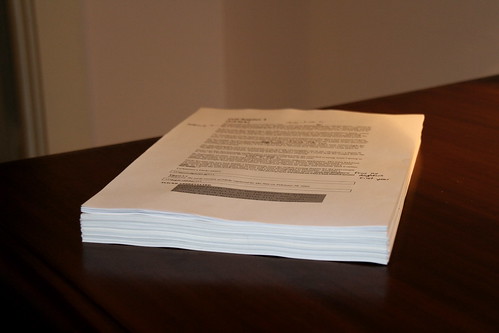
Photo credit: Yoshplay! on Flickr
I’ve mentioned this before, but some of my favorite characters ever aren’t the protagonists of their respective stories—they’re supporting characters. Sturmhond (Siege and Storm), Magnus Bane (The Mortal Instruments), Kenji Kishimoto (Shatter Me) and Sirius Black (Harry Potter) are easily among my top favorite characters, and none of them are protagonists.

We often discuss how to write strong, interesting characters with our minds on the protagonists, but supporting characters are just as important and should receive just as much attention as our protagonists do when being written and developed.

But what makes for a strong supporting character?

  • They have their own lives and backstories. Now, that doesn’t mean you have to go into every detail of that backstory in the narrative (in fact, with few exceptions, it’s probably best that you don’t). But knowing the lives of our characters, supporting characters included, helps us to create a more three-dimensional, fully-realized character. And speaking of which…

  • Their world doesn’t revolve around the protagonist. Your supporting characters have their own dreams, priorities and goals. Sometimes their goals may intersect with your protagonist’s goal, sometimes not, but they don’t live to serve your protagonist. When they’re offscreen, they’re still going about their lives, experiencing the world and moving towards some kind of goal—all things you’ll want to keep in mind when writing your supporting characters. 

  • They have their own motivations. And sometimes (though not always) those motivations may come at odds with your protagonist. Again, remember that even when your supporting characters are working directly with your protagonist towards the same goal, their motivations may not be the same as your main character—and that’s something you’ll want to consider and keep in mind. 

What else is important to remember when writing supporting characters?

Twitter-sized bites: 
Supporting characters need just as much development as protagonists, and here's why: (Click to tweet)  
What makes for a strong supporting character? Writer @Ava_Jae explains a few important characteristics. (Click to tweet)

What Makes a Book Good?

Photo credit: SimplyAbbey on Flickr
As novelists, our goal is, ultimately, to write good books. Or even better, fantastic, stupendously awesome books. But what, specifically, makes a book good?

This, of course, is an enormously subjective post. What I consider good and what you readers may consider good will sometimes overlap and many times veer away from each other quite a bit, which is to be expected. 

But I do think there are universal elements that can apply to just about any book or genre that readers tend to look for. 
  1. An interesting voice. For me, this is the single most important element. If I don’t connect to the voice, then it doesn’t matter how good the story is—I’m not going to buy it. I’ve put down an extraordinarily popular book for this reason in the past.

    Why? Because the voice is what carries you through the story. It’s an ever-present element that permeates every page, every paragraph, every sentence, every word. If I don’t connect to the voice in the first few pages, I’m not going to connect on the fiftieth page, or two-hundredth page. 

  2. Memorable characters. As a character-driven writer, I tend to remember characters best. Whenever I come across a book with a character (whether protagonist or side character) so memorable that I add them to my hall of favorite characters, chances are likely that book will make my list of favorites as well.

    Memorable characters make the story come alive. They’re unique to every book and they take us on a journey that (hopefully) we won’t forget. They make us laugh and cry and gasp and wince—they make us feel and see the world in a new way. And ultimately, isn’t that what writing and reading is all about?

  3. A vivid setting. Settings should feel equally real, whether it’s a Contemporary Romance in Indiana, or a Fantasy in a made-up world. Vivid settings help to ground the story, and not only that, they can often accentuate elements of the story through contrast, symbolism or well-placed details. Unique, interesting settings are part of the reason I love fantasies so much, but a vivid setting is equally important in any other genre. 

  4. A gripping story. I think this is the element that is the most subjective—a gripping story to me may not be so gripping to someone else. Regardless of what elements play into what a gripping story means to you, the point is that you don’t want to put the book down. You’re invested in the characters, in the plot, in the world of the book, and if that means staying up until two in the morning to find out what happens, so be it.  
What elements do you think are essential to a good book? 

Twitter-sized bites: 
Writer @Ava_Jae shares four elements that she believes are essential to a good book. Do you agree? (Click to tweet)  
What elements do you think are essential to a good book? Join the discussion on @Ava_Jae's blog. (Click to tweet

On Letting Your Characters Go

Photo credit: Chris Guillebeau on Flickr
So I’m a little weird.

In the past I’ve written about ways to get to know your characters, but over the course of several manuscripts, I’ve come to realize that my methods for getting to know my characters has changed over time.

You see, I’ve come to realize that while I’ve become a plotter as far as the events of a manuscript goes, when it comes to my characters, I tend to pants them. Or…rather…write them off the cuff, not take off their…ehem.

Anyway.

I usually have a general idea as to what the main characters will be like (usually the protagonist, love interest or significant other and the antagonist), and I usually have physical descriptions all set up, but I don’t really get to know them until I start writing. Why? Because I kept finding that just about every time I tried to force a character into a particular personality, it came out flat and…well, forced.

So instead of fighting my characters and trying to shove them into a particular personality box, I’ve been trying a new method of just letting them do their own thing. I start with a vague image of what they look like and what I think they might be like, then run with it. And so far at least? It’s been pretty fun to watch them develop, and on more than one occasion, they’ve surprised me.

Now, that doesn’t mean that they’re perfect after the first draft—far from it. I often have to take some time during revisions to really pull out elements of their personality and make them distinctive, interesting characters with their own backstory, and flaws, and a life of their own. For me, at least, the time to pull out character sheets and brainstorming methods comes after I’ve already drafted them and gotten to know them a bit—because now I have a solid starting point to build off of.

So that’s my current method—now I want to hear from you: how do you get to know your characters?

Twitter-sized bites: 
When do you meet your characters? Here's why a plotter stopped planning characters before drafting. (Click to tweet
Writers, how do you get to know your characters? Join the discussion at @Ava_Jae's blog. (Click to tweet

Discussion: Are Happily Ever Afters Required?

Photo credit: DearPioneer on Flickr
As someone who doesn’t always write happily ever afters, I may be a bit biased in this discussion, but I do think it’s worth discussing nevertheless. 

Like most discussions hosted here at Writability, I don’t think there’s necessarily a right or wrong answer, though I suspect that genre expectations may play a pretty decent role with this topic. People reading horror, for example, have wildly different expectations than those who pick up romance novels. 

But if we’re speaking generally, I suppose the thing to consider is what people generally expect when they pick up a novel, and how acceptable (or advisable?) it is to defy those expectations. 

Usually, in genre fiction, people assume the hero will overcome the antagonist (or antagonistic situation) and live with the spoils of victory, whatever that means for the novel. But what if the hero doesn’t win? Or what if the hero wins, but the victory isn't how they imagined it, or has consequences they didn’t anticipate? 

Personally, I don’t think a happily ever after is a requirement. What is required is that all loose ends are tied up and the story arc comes to completion (more on that in this post)—but that doesn’t necessarily mean your protagonist has to gallop off into the sunset on a white horse. 

To me, bittersweet or even occasionally unhappy endings are a nod to reality. Because sometimes things don’t work out the way we planned or the good outcome we imagined turns out to be not so golden. 

On the other hand, I think it could depend on the reason people are reading: some read to escape reality, others to see echoes of reality or view their reality in a new way. For escapist readers, a not-so-happily-ever-after may be disappointing. 

In the end, you can’t make everyone happy, and as I said before, I don’t think there’s really a right or wrong answer. But it’s certainly something to think about. 

What do you think? Are happily ever afters a requirement?

NOTE: Let’s avoid spoilers, yes? If you know of a book, popular or not with an unhappy ending, feel free to refer to the book, but please avoid details and title mentions. :)

Twitter-sized bites: 
Do you think happily ever afters are a requirement? Join the discussion at @Ava_Jae's blog. (Click to tweet)  
Writer @Ava_Jae muses on the necessity of happily ever afters. What do you think? (Click to tweet

On Immediately Trunking Manuscripts

Photo credit: rich115 on Flickr
Confession: I have not polished every manuscript I’ve written to a submission-ready gleam—or even tried to, for that matter.

Over the course of eight years I’ve written eleven manuscripts. Of those eleven, I brought five of them to what I at the time considered submission-ready. To be fair, one of them I only just finished a couple weeks ago and thus isn’t ready for editing, so if I remove that from my statistics, that brings me to an even 50% immediate-trunk rate. Or polish rate, if you’re half-glass full.

So now you may be wondering what happened to those five manuscripts I immediately trunked and/or thinking they were a waste of time, but I assure you they were not.

If you’re looking just at time spent, I usually take about an average of a month to month and a half to finish first drafting, so you could say that I “lost” a month with every WIP I immediately trunked. But I don’t consider it a loss, because I gained a whole lot, too.

My first insta-trunked MS, I learned just how much I enjoy making up new cultures and worlds.

My second insta-trunked MS, I learned how not to end a book, and how not to write an antagonist, and why certain clichés really don’t work. I also learned I can indeed write a book in a month. (Unsurprisingly, I don’t anticipate removing this one from the trunk ever. But I suppose you never know).

My third insta-trunked MS, I remembered certain character types that I adore—I remembered I love writing characters who are rejected by everyone, who live on the fringe of society, trying to be the best they can be while everyone around them refuses to see them for who they are. I also reminded myself that I really don’t want to write an antagonist like that. Oops.

My fourth insta-trunked MS, I learned I like writing about aliens and making up languages. I also learned that writing with an outline works really well for me.

My fifth and most recent insta-trunked MS, I learned to let my characters go and try not to strictly plan their romances. I learned writing with an outline doesn’t mean I have to stick exactly to plan, and I learned when my characters suffer real consequences for their actions, they’re so much more powerful than a slap on the wrist.

These lessons may seem a little all over the place, but in my two most recent manuscripts, I used many, if not all of these lessons to better my work.

As for why I put them away to begin with? The reasons varied, but generally it was because somewhere between the first read-through and deciding on edits, I came to realize I either wasn’t ready to start editing for one reason or another, or I didn’t love the story as much as I had while drafting. Which isn’t the end of the world, but in order for me to get through edits (and do them well), I need to believe in the story completely.

Now I’ve said this before, and I’ll probably say it again, but trunking a manuscript does not mean it’s forever condemned or it’ll never escape the trunk. All it means is that I need to put it away for the time being, and true, some of them will probably never escape the trunk, but I have hope for others that when the time is right, I’ll polish them up and they’ll be ready.

But until then, I’ll keep writing.

Have you ever immediately trunked a manuscript? 

Twitter-sized bites: 
"Trunking a manuscript does not mean it's forever condemned..." (Click to tweet
Have you ever trunked a MS? Here's why one writer put five WIPs in the drawer without querying them. (Click to tweet

How (Not) to Write a Fantastic Opening

Photo credit: Nomadic Lass on Flickr
Getting the opening right in your book is possibly one of the most important parts of writing your masterpiece. After all, without a gripping, life-changing opening, many readers won’t get to the real meat of your story.

So how do you ensure that you’ve written an epically amazing opening? Fear not, my lovely readers, for the formula to a brilliant opening is here.

How to Write the Most Incredible Opening in the History of Incredible Openings*:
  1. Dialogue in the void. Before a single line of description, before any characters are introduced, there must be super stupendously thrilling (or hysterical, or tragic, or snarky, or thought-provoking, or all of the above) dialogue. Forget dialogue tags and action beats—give us the good stuff and skip straight to voices before we know who anyone is, or who is speaking, or even where they are. 

  2. Start with an entirely irrelevant prologue. This is where your void dialogue should be—in the epic prologue with elves, and magic spells, and dragons, and that hovercraft bombing everything with super cinematic explosions, and an epically amazing ninja fight, and don’t forget the car chase with really expensive, flashy cars. Oh, you’re writing a YA Contemporary? Use the awesomesmash prologue anyway—it’ll only add to your book’s insane level of genius. 

  3. Moral of the story narration. This should be at the end of the irrelevant prologue. After all, no one is going to want to read your book if they don’t know what valuable life-lessons they’re going to learn. Honestly. 

  4. Beautiful description. If you don’t have pages upon pages of uninterrupted beautiful literary-styled description, you fail by default.    

  5. Introduce no less than fifteen characters…then kill them all off. You know, a la The Iliad. 

  6. Delve into every character’s detailed backstory. Before you kill them off, or as a eulogy afterwards, tell us every detail about their lives—from their favorite color to their very first memory, and that time their cat Colonel McMeowsers brought them that dead pigeon. This is the only way to make them feel real. 

  7. But don’t mention your protagonist until page ten. Or preferably later. You have a lot of ground to cover before you even begin to tell us who the story is about. 

  8. When you do get to your protagonist, start at the beginning of their average day. I mean, how he brushes his teeth (clockwise or counterclockwise circles? Up and down? SIDE TO SIDE?), and what kind of brush he uses to brush his hair, and what his favorite cereal is is totally fascinating stuff.

  9. Tell everything (and don’t show anything). Jimmy is angry when he hits his alarm clock. He doesn’t know why he’s angry. Maybe it’s because the bristles on his tooth brush are too hard, or maybe it’s because his mother left three days after his second birthday and that ridiculous chihuahua bit his pinky finger when he was four. He stares into the mirror while brushing in counterclockwise circles and stares into his gorgeous green eyes. Coincidentally, green happens to be his favorite color. He’s very attractive, but he doesn’t really think so. Some girls say his wavy dark locks framing his face make him look handsome, but they just remind him of his mother.

    Jimmy loves Cap’n Crunch cereal. 

  10. Author foreshadowing. Because who doesn’t love the disembodied voice telling us what’s going to happen? For example:

    But what Jimmy didn’t know was that this would be the best day of his life, and also the day he died. All because of that Cap’n Crunch. 
So there you have it! Now go forth and awesomize your opening.

*This is another sarcastic post! I beg you not to take these points seriously and please don’t use any of these suggestions. Please.

What so-called “tips” would you add to the list? 

Twitter-sized bites:
Do you have trouble writing openings? Here's a fun post from writer @Ava_Jae on ten ways (not) to open your book. (Click to tweet)
Getting your MS's opening right is very important, so writer @Ava_Jae shares 10 ways (not) to write a great opening. (Click to tweet

NaNoWriMo is Over...Now What?

Photo credit: noodlepie on Flickr
It’s December! Which means Christmas is coming and Thanksgiving is over and NaNoWriMo is complete! Now many of you have 50,000 new words or maybe even a new manuscript all nice and shiny on your computer. So what now?

What to Do:

  • Finish your manuscript. Assuming you haven’t already. 50,000 words isn’t always a full novel, depending on the genre and how lean your first drafts usually are. But if you didn’t finish, keep going! You’re nearly there. 

  • Celebrate! You deserve it! Writing 50,000 words in a month is nothing to scoff at—watch your favorite shows, read your favorite books, eat something delicious and enjoy some time with your family and friends. You’ve done something pretty fantastic, so enjoy it. 

  • Back up your files. No really. Go do it right now. I’ll wait. 

  • Make pre-edit notes. As many of you raced through that first draft, you may have some ideas already as to what will need to be adjusted or researched for and during the editing period. Write these down now, before you forget them. Because chances are, you will forget them. 

What NOT to Do:

  • Submit to agents or editors. A lot of agents and editors close to queries and unsolicited submissions in December both for the holidays and to avoid the NaNo rush. Do not under any circumstances be part of the NaNo rush. You’ve done something you should be proud of—you wrote a novel, or a large part of one at least. But what you have is a first draft, and first drafts need to be re-read, and revised, and ripped apart and edited to death before they’re refined enough to be submission-ready. And that takes time.

    Don’t sabotage your future efforts by submitting your manuscript prematurely. Take your time to get it right and you’ll be glad you did. 

  • Publish. Same as the above. Take the time to get it right before you upload your book.

Consider:

  • Give your manuscript some space. I’ve already written about the importance of letting your manuscript cool between drafts, as well as how to read your writing objectively, so I’m not going to reiterate the whole thing here. But the short version is giving your manuscript some space allows you to develop distance from your words, which in turn makes editing much more effective. 

  • Edits and revisions are not optional. I basically went over this in the first bullet, but if you want to publish your work, whether traditionally or independently, editing is not optional. Ever. The only way to make your book as good as it can possibly be is to put it through extensive edits and trade with critique partners and revise revise revise. There aren’t any shortcuts in writing. 

So those are my post-NaNoWriMo tips—what would you add to the list?

Twitter-sized bites: 
Now that #NaNoWriMo is over, writer @Ava_Jae shares some post-madness tips. (Click to tweet)  
With #NaNoWriMo over, writer @Ava_Jae shares some dos and don'ts for your shiny new WIP. (Click to tweet
Related Posts Plugin for WordPress, Blogger...