Fixing the First Page Giveaway Winner #7!

Photo credit: ~Morgin~ on Flickr
Quick off-schedule Saturday post to announce the winner of the seventh fixing the first page feature giveaway! Are you ready?

The winner is…

MEGHAN (@CUIGEMUMHAN)

Yay! Congratulations, Meghan! Expect to see an e-mail from me very shortly. 

Thanks to all who entered! There will be another next month, so keep an eye out! :)

How to Prepare for a Pitch Contest

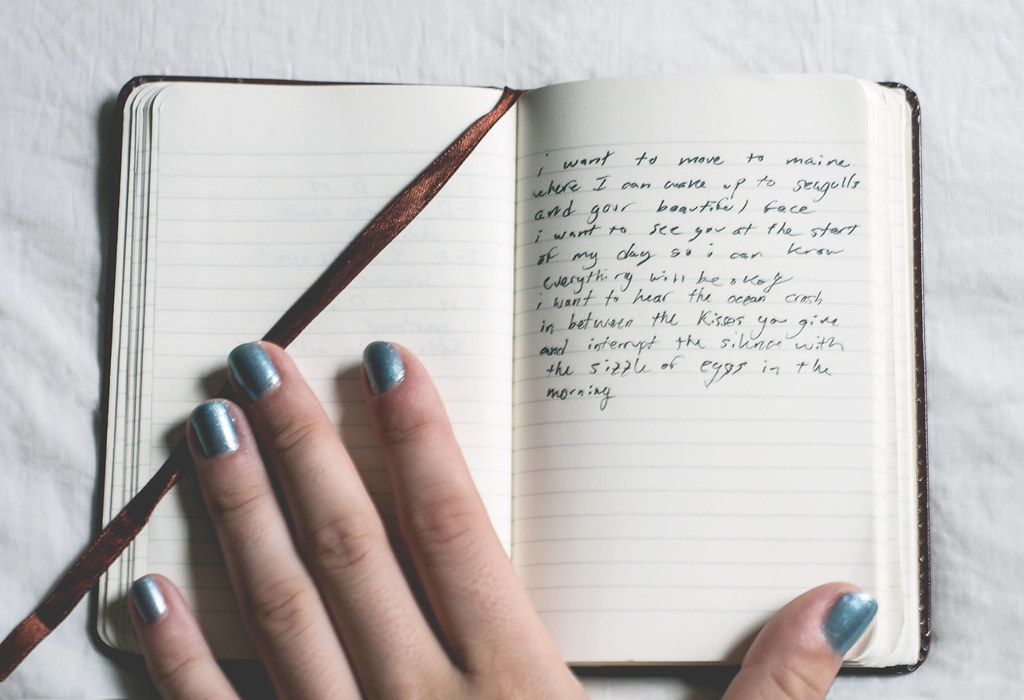
Photo credit: slightly everything on Flickr
So it’s the beginning of a new year, which means the beginning of a new season of pitch contests! This is a time I used to always look forward to in my unagented days, largely because I was slightly addicted to pitch contests. I can’t tell you how many I entered, because I’ve honestly lost count, but for me at least, it paid off.

Pitch contests, unsurprisingly, work most in your favor when you don’t jump into them blindly. So after you’ve decided you do want to enter that pitch contest, here are a few steps to take:

  1. Look carefully at the contest guidelines. This is really important because every contest is different. Some pitch contests are Twitter fests, which have rules about how many times you should post, and what’s required in your Twitter pitch, and whether or not you’re eligible (some are more narrow than others about what genres/categories are acceptable). Some pitch contests run on blogs and require pseudo-queries, or the first 250 words of your manuscript, or a few answered questions, or a sentence-long pitch, or a combination thereof. Every contest has their own rules about when to submit, how to submit, and how to participate before, during and after the event. Read the guidelines and make sure you follow the rules—the last thing you want is to be automatically disqualified because you didn’t take the time to read the guidelines. 

  2. Prepare your pitches and/or sample. Oftentimes (but not always) for a pitch contest, you’ll need a query-length pitch, the polished first 250 words of your MS, and a logline/Twitter pitch. Even if you don’t need all of those components, I highly recommend you get them together anyway, because you’ll inevitably need them.

    I’ve already written a few posts on how to write a great Twitter pitch (which can be used for any pitch, minus the character limit) as well as the importance of details in queries and pitches, and some common Twitter pitch mistakes, so I recommend you check those out for help with the actual pitch-writing part.

  3. Get your pitches critiqued (a lot). To me, the most important part of writing your pitches and sample is getting them critiqued.

    There are usually loads of places to get pitches critiqued before a pitch contest, sometimes hosted on the contest blog, sometimes set up by fellow writers and announced on the hashtag on Twitter (so make sure you check it!). But the important thing is that you show your pitch to people who haven’t read your book and see what they think. Do they understand what your book is about? Are they intrigued? If the answer isn’t a clear yes to both, you know you’ve got some work to do. 

And that’s really all there is to it. Once you’ve polished your pitches to perfection, the only thing left to do is wait for those submission dates to arrive, cross your fingers and hope for the best. Good luck!

Upcoming pitch contest submission dates:

Have you ever entered a pitch contest? Do you have any tips for preparing?

Twitter-sized bite: 
Want to enter an upcoming pitch contest? Here are a few steps to take in preparation. (Click to tweet)

On Writing in Multiple Genres

Photo credit: martinak15 on Flickr
As many of you know, my debut Beyond the Red is a YA Sci-Fi. What less of you know, is the book I just recently sent off to my agent is a NA Paranormal, and the book I’m revising now is a YA Fantasy. I also have a YA Paranormal in the drawer that I hope to one day revive, though whether or not that’ll happen remains to be seen. 

Basically, what I’m trying to say is I write in several categories and genres.

Oftentimes, I’ve come across posts about creating an author brand. The examples given usually involve authors who specialize in a single genre, and I’ve seen some (but definitely not all) insinuate that it’s in an author’s best interests to focus on a single, cohesive audience.

I totally get that, and I’m not trashing that strategy. I think it can be a totally viable, and strong strategy for genre authors, like Sarah Dessen, Gayle Forman, Jodi Picoult and John Green, for example. You know exactly what kind of book to expect from those authors, and their fans are indisputably loyal.

All of this talk of branding, however, sometimes gets interpreted to mean that authors can’t (or shouldn’t) write in multiple genres. And I don’t think that’s quite true.

While I think the strategy for an author who writes in multiple genres is naturally going to be different than an author who focuses on one (including the fact that not all fans of author genre A will read author genre B), that doesn’t mean that an author can’t be successful writing in multiple genres and categories.

Of course, I’m a little biased, so let me give some examples:


All of these authors have published (or have book deals) in multiple genres and/or categories, and I’m sure there are loads more—these are just the ones I was able to think of quickly.

It’s not often discussed, but I think especially today, writing in multiple categories and genres is becoming increasingly more common. Which, for writers who love writing in different genres and categories, is possibly the best news ever.

So whether you write in one genre or five, I encourage you to write whatever your heart desires. After all, ultimately, it’s not the genre or the category that sells a book—it’s the passion behind the story itself.

What do you think? Is it smart for writers to write in multiple genres or categories?  

Twitter-sized bites: 
Is it smart for authors to write in multiple categories or genres? Writer @Ava_Jae weighs in her thoughts. (Click to tweet) 
Do you think writers should write in multiple categories or genres? Join the discussion on @Ava_Jae's blog. (Click to tweet)

Vlog: How to Query: Research

So your WIP is fully revised and ready to go, which means it's time for querying! Sort of. Time for query prep. Here's how to get started.


RELATED LINKS:


What tips or resources do you have for writers researching agents? 

Twitter-size bite: 
Getting ready to query but don't know where to start? @Ava_Jae vlogs about the first step: researching agents. (Click to tweet)

Fixing the First Page Giveaway #7

Photo credit: ShardsOfBlue on Flickr
Guess what, my lovelies? The time has come for the first Fixing the First Page giveaway of 2015! Yay!

For those who’ve missed it in the past, the Fixing the First Page features is a public first 250 word critique. Using the lovely rafflecopter widget, anyone interested in winning a PUBLIC (as in, featured in a post on this blog) first page critique can enter.

For an example of what this critique will look like, here's the last Fixing the First Page post.

Rules!

  • ONLY the first 250 words will be critiqued (up to finishing the sentence). If you win and send me more, I will crop it myself. No exceptions.

  • ONLY the first page. I don’t want 250 random words from your manuscript, or from chapter 3. If you win the critique and send me anything other than the first 250 words of your manuscript, I will choose someone else.

  • I will actually critique it. Here. On the blog. I will say things as nicely as I can, but I do tend to be a little blunt. If you’re not sure you can handle a public critique, then you may want to take some time to think about it before you enter.

  • Genre restrictions. I'm most experienced with YA & NA, but I will still accept MG and Adult. HOWEVER. If your first page has any erotic content on it, I ask that you don’t enter. I want to be able to post the critique and the first 250 in its entirety without making anyone uncomfortable, and if you win and you enter a page with erotic content, I will choose someone else.

  • You must have your first page ready. Should you win, you need to be able to submit your first page within 48 hours of my contacting you to let you know you won. If 48 hours pass and I haven’t heard from you, again, I will choose someone else.

  • You’ll get the most out of this if it isn’t a first draft. Obviously, I have no way of knowing if you’re handing me a first draft (though I will probably suspect because it’s usually not that difficult to tell). I won’t refuse your page if it’s a first draft, but you should know that this critique will likely be of more use if you’ve already had your betas/CPs look over it. Why? Because if you don’t, the critique I give you will probably contain a lot of notes that your betas & CPs could have/would have told you.

  • There will not be a round 2 (unless you win again in a future contest). I hate to have to say this, but if you win a critique, it’s NOT an invitation to send me a bunch of your revisions. I wish I had the time available to be able to look at revisions, but sadly, I don’t. If you try to break this rule, I will nicely say no, and also remember to choose someone else should you win a second contest. Which would make me sad. :(

So that’s it! If you’re okay with all of the above and would like to enter to be the sixth public critique on Writability, do the thing with the rafflecopter widget below. You have until Friday, January 23 at 11:59 EST to enter!

a Rafflecopter giveaway

The Secret to Building Any Social Media Platform

Photo credit: HealthGauge on Flickr
Any of you who follow me on any of my many social media channels know that I’ve sort of embraced the whole social media thing to an extreme.

What I mean isn’t so much that what I post is extreme in any way (it’s not, at least, I don’t think so), but that now, in 2015, I am everywhere. Maybe not literally, but as far as the internet is concerned, I am in all the places.

Twitter, tumblr, Facebook, YouTube, Instagram, this blog, if it’s been moderately popular, I’ve at least looked at it. The only two I haven’t really connected with are Pinterest and Google + (though Google + seems to have made an account for me, in a creepy, mandatory I see you have gmail way, but that’s another matter entirely…).

I’ve been running this blog and Twitter the longest, so naturally my biggest followings come from those two sources. But over the course of a few years, my tumblr and Facebook have grown, and while my YouTube and Instagram accounts are both new (especially the latter), things seem to be chugging along pretty nicely there, too.

The thing is, every social media platform requires different ways of interacting with people. Every strategy that’ll get you Twitter followers, for example, won’t really work on YouTube, or the strategies you use to get more hits on your blog won’t really apply to Instagram.

There is, however, one thing you need across all platforms if you’re trying to build a following: consistency.

Whenever I start a new social media venture, I try to set out right at the beginning how often I intend to post and when. To give you an example, this is what I generally aim for:

  • Blog: post on Monday, Wednesday, Friday, check comments daily (when possible).
  • Twitter: check daily (mostly because I’m addicted…)
  • Tumblr: check daily (usually only a few minutes at a time), re-post blog posts and vlogs here, reblog anything interesting I see.
  • Facebook: re-post blog posts and vlogs, and browse through FB feed for a few minutes afterward
  • YouTube: upload on Tuesdays, answer comments as they come in (when possible).
  • Instagram: still working out a schedule. Try to check daily and post at least once a week.

I don’t spend equal amounts of time on each platform every day (or even overall). But what I do try to aim for is some sort of consistent presence.

For YouTube, that consistency means a vlog a week and checking comments. For Twitter, it means something entirely different—somewhat unending retweeting, tweeting and feedstalking (but again, that’s mostly because Twitter is my favorite, so…). So on and so forth.

Consistency doesn’t mean that you can’t ever take a break, or that if you fall behind one day it’s the end of the world. What it does mean, however, is that you give your viewers/followers/whatever a sense of when they should expect to see content from you. Because, after all, the more you show up, the more they will.

What tips do you have for building a social media presence? 

Twitter-sized bites:
Trying to build your social media platform? @Ava_Jae shares one key tip to growing your online presence. (Click to tweet)  
"One thing you need across all platforms if you're trying to build a following: consistency." (Click to tweet)

Some Thoughts on Writing and Fear

Photo credit: Send me adrift. on Flickr
So I did this thing on Sunday night where I sent my second manuscript to my agent. And even as I think about it now, more than twelve hours later when writing this post, I still get a little quiver of anxiety.

There are a couple reasons why.

Firstly, this is the first manuscript my agent will see that she didn’t read before offering to represent me. It’s kind of a weird situation, because with the first manuscript, you know your agent will love it because they chose you based off of that manuscript (so they’ve already told you they love it). Any manuscripts after that? You kind of just do your best and hope everything works out. Judging by what I’ve seen other agented writers talk about online, this not an uncommon anxiety amongst writers.

Second, the manuscript. This MS, and the next one I’ll be revising, and the one after that all terrify me for various reasons. For the MS sitting in my agent’s inbox, it’s mostly the extremely personal nature of the manuscript, which I won’t really get into today, but I will say writing it was the most terrifying experience I’ve ever had with a book.

To give you an idea, when I finished first drafting it, I immediately put it away and declared it was awful and I’d never look at it again. Partially because I rushed through the ending and writing the whole thing was ridiculously difficult, and partially because the idea of taking that manuscript seriously and actually showing people really really scared me.

Even now, after seven people have read it and given me (largely positive) feedback, it still scares me. And to be honest, I’m not sure if I’m more terrified that my agent will read it and tell me to scrap it (or that it needs a bajillion years of work) or if she’ll read it and love it. If I’m being totally transparent here, I think the latter, right now, sounds scarier than the former.

Just writing this post is freaking me out a little.

There’s this quote on writing going around that I’ve even shared myself that basically says to write what scares you. The implication is that’s where your most powerful, raw writing will come from, and in my experience, that’s pretty true.

I’d also say, however, that writing what scares you doesn’t stop being scary after you’ve written it. If anything, it’s more terrifying, because you’ve written it, it’s out there, and now other people will see it. Potentially.

It’s no wonder so many writers struggle with anxiety.

I don’t know if this book will ever go on submission. I don’t know if it does go on submission if it’ll ever sell. I don’t know if any of you will ever see it.

What I do know, is despite the terror, I’m proud of this book.

I know that whatever happens, I love writing, and I’m excited to dive into my next project.

I know that even though my next book scares me, as does the book after that, I’m going to revise them anyway and make them as good as they can be.

Writing what scares you, as it turns out, is scary. But usually it’s because the stories that come out of it are really extra special.

Have you written a MS that scares you?

Twitter-sized bites: 
"Writing what scares you doesn't stop being scary after you've written it." (Click to tweet)  
Have you written a MS that scares you? Join the discussion on @Ava_Jae's blog. (Click to tweet)
Related Posts Plugin for WordPress, Blogger...