Social Media: It's not About You


Photo credit: JanneM on Flickr
Before I joined Twitter, I had a lot of ideas about what it would be like. I assumed it’d be mostly people tweeting randomness about their lives that no one really needed to know or cared to hear about. And although randomness does appear on Twitter (even I couldn’t resist telling the world about the success of my attempt at Butterbeer cupcakes), it’s a lot more than that.

I assumed a lot about what it would be like, but I never imagined what a huge role community would play into it.

I know so far I’ve really only mentioned Twitter, but this applies to just about any form of social media, be it Facebook, Tumblr, LinkedIn (I’m guessing), Blogging, et cetera et cetera.

I’m not any expert, nor will I pretend to be. I only really dove into social media this past April, so really, I’m still a newbie. But if there’s one thing I’ve learned so far, it’s that when it comes to social media, it’s not about you.

Whoa, there. Not about me? Isn’t social media about building my platform and getting my name out there? Well…yes and no.

I’d be naïve to say that the overall goal isn’t to build online influence. It is—even I get excited when my Klout score goes up, when I get a bunch of new followers on Twitter, when my blog has a successful day with a lot of page views. Yes, the goal is, for most people at least, to build a platform and get known.

BUT. If you really want to flourish online, if you really want to get a group of loyal followers, if you really want people to like you (and when your goal is building a platform, trust me, you do), you have to accept that this isn’t about you.

Your blog? It should give helpful/interesting/entertaining information to your readers. It’s not about you.

Your Twitter? It should be used not only to spread your own ideas, but those of others. Networking means reaching out to other people and supporting them in their journeys. It’s not about you.

Your Facebook? Yes, it has your personal information, your picture, your interests but that like button isn’t for promoting your own posts, now is it? It’s not about you.

Here’s a little secret: people will tolerate listening to you talk about yourself sporadically. Hey, sometimes they even ask and that’s great. But if all you do is promote your own work, if all you do is talk about yourself and spread links galore to your various sites, guess what? People will stop caring. Why should they support you if all you do is support yourself?

You know that old saying “There’s no I in team?” (and yes, I’m aware there IS a “me”, but that’s beside the point.) Well it applies here. Social media is a team effort. It’s a community.

And unless you start supporting your fellow members, you’ll find that people will let you keep doing what you’re doing. They just stick around to listen.

How has community affected your social media experience?

Confessions of a Techie Book Lover

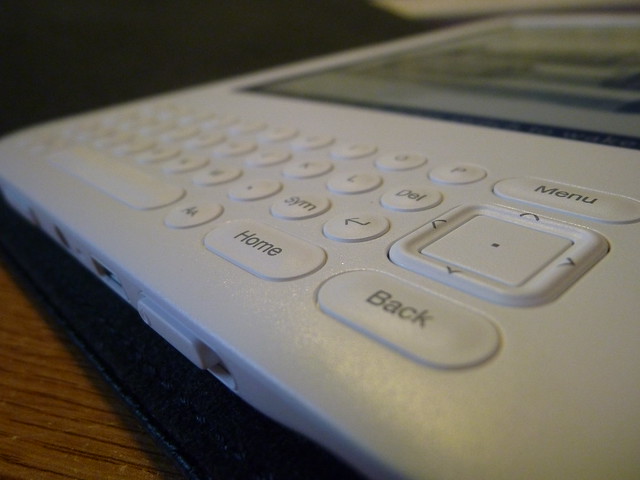
Photo credit: Witer on Flickr
I am very picky with the things I love, namely: writing, reading and technology.

I’ve talked about being picky with my writing. It’s called perfectionism

I’ve mentioned that I’m picky with what I read when talking about my epic TBR pile (which I REALLY need to get started on).

Technology…now that I haven’t quite covered. You’re probably thinking, well duh Ava, this is a writing blog, not a geeky technology blog. And that’s true. Except as well as being a reading/writing/movie/CG/X-Men/Harry Potter/Photoshop geek, I also happen to have a love for all things technological and it totally relates to writing/reading, I promise.

Before I buy any new technology, I read the reviews. Actually, that’s a bit misleading; I live and breathe the reviews for at least a day (usually more like a week) before I make any decisions. And if the reviews are bad, guess what? I’m not spending my money on it.

I also have this really bad habit of falling in love with technology I totally can’t afford (can you say MacbookPro?), but that’s another matter entirely.

So what does this have to do with all things literary, you ask? One word: e-reader.

The e-reader combines two things I love the most into one boss item, so you’d think I’d totally jump onto that ASAP, right? Well…

As of right now I don’t buy e-books. It’s not because I thumb my nose at self-publishing (I definitely don’t, I have mondo respect for all you indies out there), it’s not because I think e-books are inferior to actual books (even I will tell you that it’s the writing that matters, not the format), it’s not even that I love the new book smell so much I don’t know what I’d do without it (ok, maybe it’s a LITTLE bit that). The reason I don’t buy e-books, guys, is just that I’m really picky about the way I read.

Technically, I have an e-reader. It’s called an iPod Touch and it’s a little bit frightening how addicted I am to it. I take it everywhere and I don’t even use it to listen to music half the time. And yes, I’m fully aware that I can buy e-books on it, in fact I’ve even downloaded a few free samples to try it out. And although the samples were all fine, I wouldn’t read anything more than quick excerpts on it. Why?

Two reasons:

  1. The screen is too tiny. I don’t know how many of you have an iPod Touch or iPhone or have played around with one (I’m willing to bet it’s most of you, though), but that screen is tiny. It’s fine for playing games, for listening to music, even for jotting down little notes. But reading? I don’t know guys, I just don’t buy it.

    I have pretty decent eyes, I can deal with the tiny type (and I know I can make it bigger if I want to). What annoys me is only being able to read about a paragraph before I have to flip to the next page. The reading experience goes from flowing through an entire page (or two, depending on which page you’re on) to something like this:

    Once upon a time there was a boy and a girl. The girl met the boy and…

    …decided she didn’t like him very much but the boy liked the girl very…

    …much.

    Ok, lame story, I’m feeling a little lazy right now but that’s not the point. The point is that having to “flip” to the next page every few sentences drives me crazy.

  2. The battery life. I don’t know what the official count for iPod Touch battery life is (I don’t have the newest one either, so it’s probably not as much as the newer models), but I do know that if I read on it all the time, it wouldn’t last very long. As it is I often have to charge it part-way through the day because I’ve overused it and it’s 3:00 and my iPod only has 20% battery left and it keeps giving me these little notifications that say I’M RUNNING LOW ON BATTERY and I’m like OK, OK iPOD I’LL CHARGE YOU IN A MINUTE and it’s like CHARGE ME NOW I’M RUNNING LOW, MY BATTERY IS RED, SEE?

    Now imagine trying to read while having that (totally normal) argument when your iPod. Maybe you could deal with it, but I can’t.

Now technically I have another e-reader, too. It’s called a laptop. And technically I could download e-books for reading onto it. And I’ve tried.

But guys, six years of reading work that needs editing on my computer has trained my brain to think if I’m reading it on the computer it isn’t finished and I know that’s seriously nitpicky and I’m sorry but that’s what it feels like to me. Not to mention that reading on the laptop screen gets tiring pretty quickly anyway.

Ok, ok, so obviously my solution is to go out and buy an e-reader. And I’ve tried a whole bunch of them out in the stores to see how I like them.

Well guys, I found one I like. Remember that bad habit I mentioned? The one about falling in love with technology you can’t afford?

Yep. I decided that the iPad is the best fit for me. Crap. (I’d go into huge detail about why I think the iPad will suit me best, but this blog post is long enough as it is.)

Seeing how I’m still saving up to replace my laptop, I don’t think I’ll be buying an iPad any time soon. Will I cave in and dish out money for a cheaper e-reader before then? I don’t know, it’s certainly possible. We’ll see how I feel around Christmas, I suppose.

One thing’s for sure though, I have a nice list of e-books in my head that I will most definitely be downloading when I do get one.

So what do you guys think? Am I being too nitpicky? (It’s ok, I know I am). What e-reader do you use if you have one? (I like reviews, remember?) 

When They Don't Understand


Photo credit: Majicdolphin on Flickr
I've noticed an interesting phenomenon. Maybe it’s just me, but I have a sneaking suspicion it’s not. When you tell people that you’re a writer, their reactions (in my experience) tend to vary depending on how well they know you.

It goes a little bit like this:

Strangers: Oh wow! That’s great, what do you write? Have you been published?

Friends: Cool! I’ll definitely buy a copy when you get published!

Best Friends: Oh nice, how’s that going?

Family: Right, right, but you have a job, don’t you?

To further illustrate this phenomenon, I drew a little graph (I did it on Paint, don’t judge):

(Noooo it’s not a triangle, it’s a graph. SEE?)

Ok, so artistic merit aside, I think you get the point.

It’s not that your family thinks less of you than a stranger you happen to talk to at Starbucks, it’s not that they’re selfish, or insecure or don’t want to see you succeed. It’s the opposite, actually.

The problem is the more that people know you, the more that they care. A stranger on the street can be excited about your career and never see you again. They aren’t worse for the wear if things don’t work out, if you can’t pay the bills, if, in the end, your dream doesn’t turn out so dreamy after all.

But your close friends, your family, they don’t want to see that happen to you.

When your family asks about your job, about how you’re going to pay the bills, they’re not trying to crush your dreams; they’re trying to be realistic. It doesn’t mean they don’t believe in you, it doesn’t mean they think you’re a loser, it means they want the best for you. They want you to be able to pay the bills at the end of the month and live a healthy lifestyle.

Until writing starts to bring in some income, they don’t equate writing with job. They think hobby. And let’s be honest, that type of reaction is perfectly natural. Because they don’t understand.

They don’t know that writing is a job long before you make a penny off of it. They don’t know that the time you take to build your platform, the connection you make with future readers, with other writers, the work you put into every page, every paragraph, every word to make it as good as you possibly can is invaluable.

They don’t understand that if you keep improving your craft, and you don’t give up, and you write and edit and read and write, then one day all that effort and time you put into it might just pay off.

They don’t understand and that’s ok. They love you, don’t forget it.

And when your hard work does pays off, they’ll be happy for you and though I hope you don’t say it, you’ll be able to smile and think I told you so. Because you did.

Am I the only one who’s encountered this trend? Have you faced something similar? Share your thoughts! 

Finding Your Zone (Again)


When it comes to increasing productivity, one of the most important things to recognize is when (and where) you work best. Of course since this is a writing blog, I’m talking primarily about writing, but I have a sneaking suspicion that it could be applied to other things, as well.

I’ve read a lot about finding that “sweet spot” of the day when the writing comes easier. They often talk about how it’s different for everyone—how one writer may pound out a few thousand words before  bed and another first thing in the morning. They talk about finding that place where you can just slip into your writing—be it a library, a café, an office, outside on the deck, etc.

What they don’t usually talk about is how it can change.

You see, in my experience anyway, you have to be flexible when settling into you zone, because after a while it might not feel right anymore.

A few years ago, my sweet spot was in the early afternoon, between one and three. I worked best in at the kitchen table with a pair of headphones and iTunes running endlessly. For reasons I will never know, wearing a pair of headphones made it easier for me to shut everything else out (even when there was little noise distraction to worry about). I could write for hours like that.

But then it changed. It wasn’t drastic—I probably could’ve continued in that spot if I really pushed myself to, but it didn’t feel as easy. Everything felt too routine, and I had trouble focusing.

Then one morning, I woke up earlier than usual and couldn’t fall back to sleep, so I dragged myself to my computer and checked Twitter (because that’s what EVERYONE does right? Right? Ok, moving on). There was a #wordmongering session about to start in a few minutes and I figured, why not? and jumped in.

Then something happened.  The writing flowed. By noon I’d written well over my 1,500-word quota. I felt energized. I’d already completed my writing goal and I had an entire day ahead of me. I was proud of myself. I was happy.

I wanted to do it again.

So now I write in the morning. I still often use headphones (don’t ask why, I can’t explain it myself) and my writing goals haven’t changed, but the writing comes easier again. Not only that, but when I do reach my goal (and I don’t often stop until I do), I feel great for the rest of the day.

So, my fellow writers, moral of the story is sometimes, your zone changes. If your writing starts to feel stale during that “sweet spot” of the day, maybe you need to change things up a little. If you usually write in the morning, maybe you need to try after lunch. If you usually write at night and lately the words have been about as easy as pulling out your own teeth with only a tissue in hand, maybe you should give it a try earlier in the day.

When the routine stops working, try new things. You never know when you’ll find a zone that works even better for you than it did before.

When (and where) is your zone? Has it ever changed? 

How to Be a Happy Writer


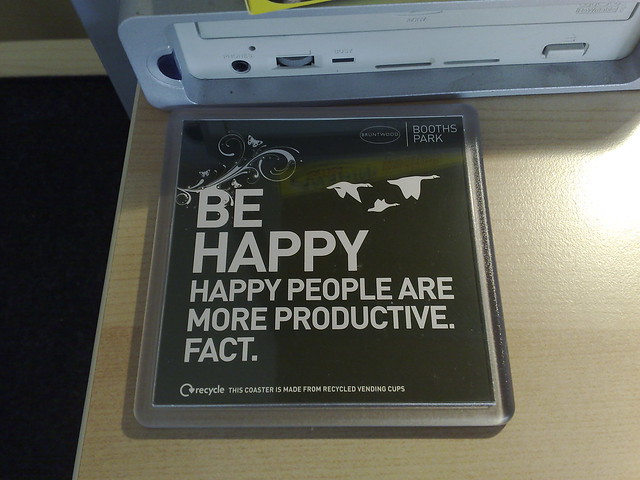
Photo credit: ohskylab on Flickr
Most writers are ambitious people—we have to be, after all, just setting out to write a novel is an ambitious move on its own. Many of us understand the worth of delayed gratification, and those of us who don’t learn it very quickly or quit.

So, ambitious people that we are, we tend to focus on the future. We’re motivated. We work hard to accomplish our dreams and focus on completing our goals—which is a good thing.

But although we put in the blood and sweat to see our dreams realized, we often forget to pause long enough to celebrate what we’ve already achieved.

What I’m saying is, we forget to enjoy the stage we’re in.

Many writers fall into the “I’ll be happy when…” trap. I know I did. We tell ourselves, I’ll be happy when I finish the book, when I finish editing, when I get an agent, when I get published, when I publish my second book, on and on and on. But guess what? When we do finish the book, when we do get the agent, we tend to celebrate for a short time, then amend our statement.

Now I’ll be happy when I sell x many copies. Now I’ll be happy when so-and-so blurbs my book. Now I’ll be happy when I have a five-star rating.

Forget that, guys. Don’t be happy later. Be happy now.

I’m not published. I don’t have an agent. I have four books in the drawer, many of which will probably never see the light of day, two more that I’m editing and another that I’m brainstorming. I don’t know if I’ll ever have an agent, if I’ll ever see my book at Barnes & Noble, if I’ll ever make any sort of best-selling list at all. And sometimes it’s heavy. Sometimes I want to stop and do something that other people will recognize as productive. Something my friends and family will understand.

But then I remind myself why I write. It’s not for the money, for the book contract, hell, it’s not even for readers (although all of those things are very nice).

It’s for me. Because I love it.

Sometimes we need to stop and remind ourselves all that we have accomplished. No I’m not published, but who cares? I’ve written six novels and I’m proud of every one of them. I’ve had journeys with my characters, I’ve fallen in love with them, I’ve developed them and then moved on. But they’re mine, and they’re alive because I wrote them.

And that in itself is something no one can take away from me.

Maybe you haven’t written a book yet. Maybe you’re too afraid to start. If that’s the case, ask yourself why you want to do it. If it’s for the money, for the fame, then maybe writing isn’t right for you. If it’s because it’s something you want to do for you, if it’s because you have a story and you want to write it to life, then go for it. Even if it never gets published, it’s a story that you’ve created, a story that will always be with you.

Maybe you’ve written a book and like me, haven’t been published or picked up by an agent. That’s ok too; I challenge you to take the time to see all you’ve accomplished. I challenge you to take a moment to remember the characters you’ve created, the lives you’ve pulled from the depths of your mind.

I don’t care what stage you’re in; take the time now to enjoy it.

And whenever you’re feeling discouraged, remind yourself why you started it all in the first place. And smile. Because you’re a writer, my friend, and you’re just doing what writers do.

Take time to celebrate your accomplishments and share them here; I’d love to hear about it. J

On Critiques

When I was in high school, I took two Creative Writing classes. Since I’d devoted myself to writing every spare moment I had since the eighth grade, by the time I took these classes in my final two years of high school, I’d honed my craft more than most of my peers. I’m not saying I was better than them—I was just more dedicated than most.

So when time came to give critiques to my classmates, I’d sit down with my colored pen and makes notes all over the page. I underlined, circled, crossed out and made as many annotations as I could think of.

Then I’d receive my work back and look at my critique. Nine out of ten times it said: “Great job,” or “I like it.”

I’d stare at the page and wonder what the hell I could do with that. Great job? Yeah, ok, I was glad they liked it, but “great job” didn’t tell me what needed fixing. “I like it” is not a critique.

High school aside, I think it was that experience that made me appreciate critiques the way that I do today. Do I still occasionally get feedback that although makes me feel all fuzzy inside, doesn't help me edit my work in the slightest? Absolutely. But when I receive a “harsh” critique, I get excited. I tell the whiny, insecure part of me to shut up and turn on the editor. I attack my writing and look over the critique notes until I’m sure I've tackled every issue. 

But I know not everyone shares my competitive nature, so not everyone sees the critique as a challenge like I do.

Does it hurt to swallow an honest critique? Yes. But the most helpful ones aren’t the ones that are easy to take.

If you look at a critique and want to hide, that means your crit partner has done their job.

Let me clarify: I don’t mean that your critique partner should be a jerk; I mean they should be honest. When you get back a chapter or manuscript or whatever it is and see notes all over the page with suggestions, it can be daunting. But it’s good.

Repeat after me: dripping red ink is good.

Here are some tips that have helped me review critiques without wanting to drown myself in confetti and cupcakes:

  • Read it. Then put it away. This is especially helpful if the critique has made you emotional in any way. Emotional editing is dangerous and often unproductive. Read your critique, then put it away. Let it sit for an hour, a day, however long you need. Set your emotions aside, then come back and look at the notes again before you dive into edits. Remember this will make your work better. It will. I promise.

  • Take it in pieces. I know when I read critiques for the first time, with every suggestion or weakness that’s pointed out, I saw it added to this mountain in my head of things that need changing. Don’t let the mountain overwhelm you. When it starts to feel like too much, close your eyes, take a deep breath and if you need to, take a break. Go do something else. Relax. Then come back and tackle one issue at a time. Don’t worry about the rest. Pick one thing to focus on and cross it off the list, then move on to the next.

  • Remember perfection is not the goal. This is a big one for me. If you've read more than two of my posts, you know I’m a perfectionist. I have to remind myself that perfection is not the goal just about every time I sit down to edit. Guess what? Not all good books are well written and not all well written books are good. Your goal should be to make your book the best you can. Tell the story, make your characters alive, make your readers care.

  • Then move on and tell the next story.  One book doesn't make a career. You have more stories to tell. Go write them.


So that's my take on critiques. What tips do you have? 

Loving Your Villain

Photo credit: Martin Cathrae on Flickr
I’m going to do this thing where I give you guys a tip I’m going to start taking myself. As of right now.  

Not too long ago I wrote about getting to know your characters. Today I’m going to be a little more specific. Getting to know all of your characters is excruciatingly important, we know this. Knowing every intricate little detail about your protagonist and second lead pretty much goes without saying. We know we need to know everything about those guys because we spend the most time with them.

But the villain…he tends not to get as much love.

As you probably can guess by the first sentence, I am guilty of this in many of my WIPs. I usually start with good intentions—in two out of the last three WIPs I wrote I went in thinking ok, this time I’m going to make my antagonist sympathetic. It’s going to happen!

But then it doesn’t happen.

See, it turns out villains don’t magically become sympathetic (shocker, right?) They’re the villain—they don’t want your pity, they want your respect, your fear, those kind of delicious goodies. But sympathy? Villains scoff at sympathy.

They also tend to make you—the writer—forget that they were supposed to be multi-faceted at all. They want to be evil.

For me at least, the problem was that I didn’t love my villain enough. I loved my protagonist, I loved my second lead, I even loved some minor characters. But the antagonist? Well, yeah, he was cool too. But did I love him? Not really. I just needed him. You know, for conflict.

So now as I’m brainstorming again, I came to a stunning revelation. I already knew that I needed to give my antagonists more attention before I starting writing—that much was obvious. But I came to realize that not only do I need to love my villain, I need to love him more than my protagonist.

Now before you burn me at the stake for heresy, hear me out.

You’re predisposed to love your protagonist—if you don’t, you have a bigger problem on your hands you should probably fix, but nine out of ten times loving your protagonist isn’t an issue. It’s also pretty easy to love your second lead, especially if said lead will be involved in a romance with your protagonist (which, let’s face it, happens a lot.)   

But your antagonist. Falling in love with your villain takes a little extra work. You see, you’re predisposed not to love your villain. After all, your protagonist hates him and in the end (in most situations) your villain will fail. Why would give a character that’s going to fail (or possibly even die) in the end extra affection? Especially after all the crap he’s putting our MC through!

The answer is simple: if you don’t love your villain, your writing will show it. Your antagonist will have one side: EVIL, and fall under the category of stereotypical bad guy. Why? Because you didn’t spend enough time getting to know his other side.

Take a look at your villain. Do you know his family? Does he have siblings? What are his dreams? What does his mother think of him? What is his guilty pleasure?

Spend some time with your antagonist. Let him tell you all about himself, get to know him and don’t stop until you absolutely love him.

Because once you love your antagonist, something funny happens—you want your readers to love him too. And you’ll make sure they do.

Bet you guessed this question: who are your favorite villains? I’m going to remember to answer this time—I love many killers from Ted Dekker’s thrillers (like Boneman’s Daughters, Adam, The Bride Collector and The Priest’s Graveyard). All have really excellent villains.

Related Posts Plugin for WordPress, Blogger...