Showing posts with label paragraphs. Show all posts

Writing Tip: Listen to the Rhythm of Your Words

“This sentence has five words. Here are five more words. Five-word sentences are fine. But several together become monotonous. Listen to what is happening. The writing is getting boring. The sound of it drones. Its like a stuck record. The ear demands some variety. Now listen. I vary the sentence length, and I create music. Music. The writing sings. It has a pleasant rhythm, a lilt, a harmony. I use short sentences. And I use sentences of medium length. And sometimes, when I am certain the reader is rested, I will engage him with a sentence of considerable length, a sentence that burns with energy and builds with all the impetus of a crescendo, the roll of the drums, the crash of the cymbals—sounds that say listen to this, it is important.” 
Gary Provost
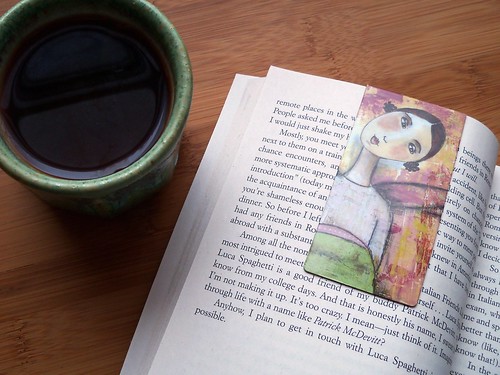
Photo credit: A Girl With Tea on Flickr
I love that quote for several reasons, the most important of which being that it teaches a valuable lesson through example. 

You see, writing isn’t just about conveying a story or message—although that’s a large part of it. It’s about conveying meaning in the purest way possible, in a manner that doesn’t distract the reader from the meaning, but enhances the experience. 

I’m not talking about purple prose—the issue with purple prose is that the language becomes so flowery and overdone that it distracts from the intended focus of the words.

Instead, I’m talking about reflecting the rhythm of rain not just through description, but through the cadence of the sentences. About making a reader’s heart pound as they race through an exciting scene with shorter paragraphs, then slowing them down with longer sentences and blocks of text during a resting period. 

Because while forgetting to do this may not change the meaning of the story, it will change the reader’s experience as they work through the pages. An exciting scene weighed down by large blocks of text may lag and feel monotonous, and a would-be breathtaking description may fall flat. 

I’m not here to tell you to start obsessing over your sentence and paragraph length, but it’s certainly something to be aware of while writing and revising. Take note of the cadence of your words—read them aloud and listen to the rhythm of the sentences. 

Make sure that your readers can hear you say, listen to this, it’s important. 

Do you pay attention to sentence or paragraph length while writing or revising?

Twitter-sized bites: 
Do sentence and paragraph length change the reader's experience of your writing? One writer says yes. (Click to tweet
Do you pay attention to the rhythm of your writing? Here's why you may want to. (Click to tweet)

Paragraphs: A Little Rant

Maybe it’s my short attention span or maybe it’s the high school AP English teacher trapped in my skull saying, “Guess what? You were lied to: all paragraphs do NOT have to be five sentences. In fact they better NOT all be the same length OR ELSE!” but I take issue with long paragraphs.

Now, you’re probably wondering what defines a long paragraph. Is it five sentences? Ten? Thirteen? TWENTY-FIVE?

With exception of that last one (because I pray you never write a paragraph with twenty-five sentences), I’d actually say that depends. Yes, yes I know, diplomatic answer, but hear me out.

If you write a paragraph with three ridiculously long sentences (as in thirty or—God help you—more words), then guess what? You have yourself a long paragraph.

If, on the other hand, you write a paragraph with five or six telegraphic sentences (one without any embellishments such as “The cat meowed.”), then my long paragraph alarm will probably remain silent.

The best and easiest way to tell if your paragraph is too long is simply by looking at it. Does it look like a brick sitting on the page? Yes? Then it’s probably just that—a brick on your page.

Now, that’s not to say that all long paragraphs are evil. I won’t completely discriminate here, I know the value of having a long paragraph or two, especially if the pace has slowed down and you’re giving the reader a bit of a breather. In that case yes, longer paragraphs are acceptable. Necessary, even.

But just as I would advise against having a page full of uniform short paragraphs, I strongly advise against the same with long ones.

Now again, I’m not claiming to be any expert because I’m not. But I’ve found that varying paragraph (and sentence) length not only helps set the pace and create a nice flow, but adds a little extra dynamic element to the writing. 

It might be a subconscious thing, or it might just be the all-too common ADD nature of readers like me nowadays, but when I see paragraph after paragraph of the same length (albeit long or short), my eyes tend to glaze over. It becomes monotonous. The voice in my head goes dull and flat and—zzz….

Varying paragraph and sentence length helps fight against that. Rather than a steady, flat reading experience a long paragraph followed by a short paragraph breaks up the page and harmonizes with each other. It acts like a chord in a song rather than the same single note over and over again.

It works. And it keeps us interested.

So what do you think? Does paragraph length make that much of a difference, or am I just crazy? J
Related Posts Plugin for WordPress, Blogger...